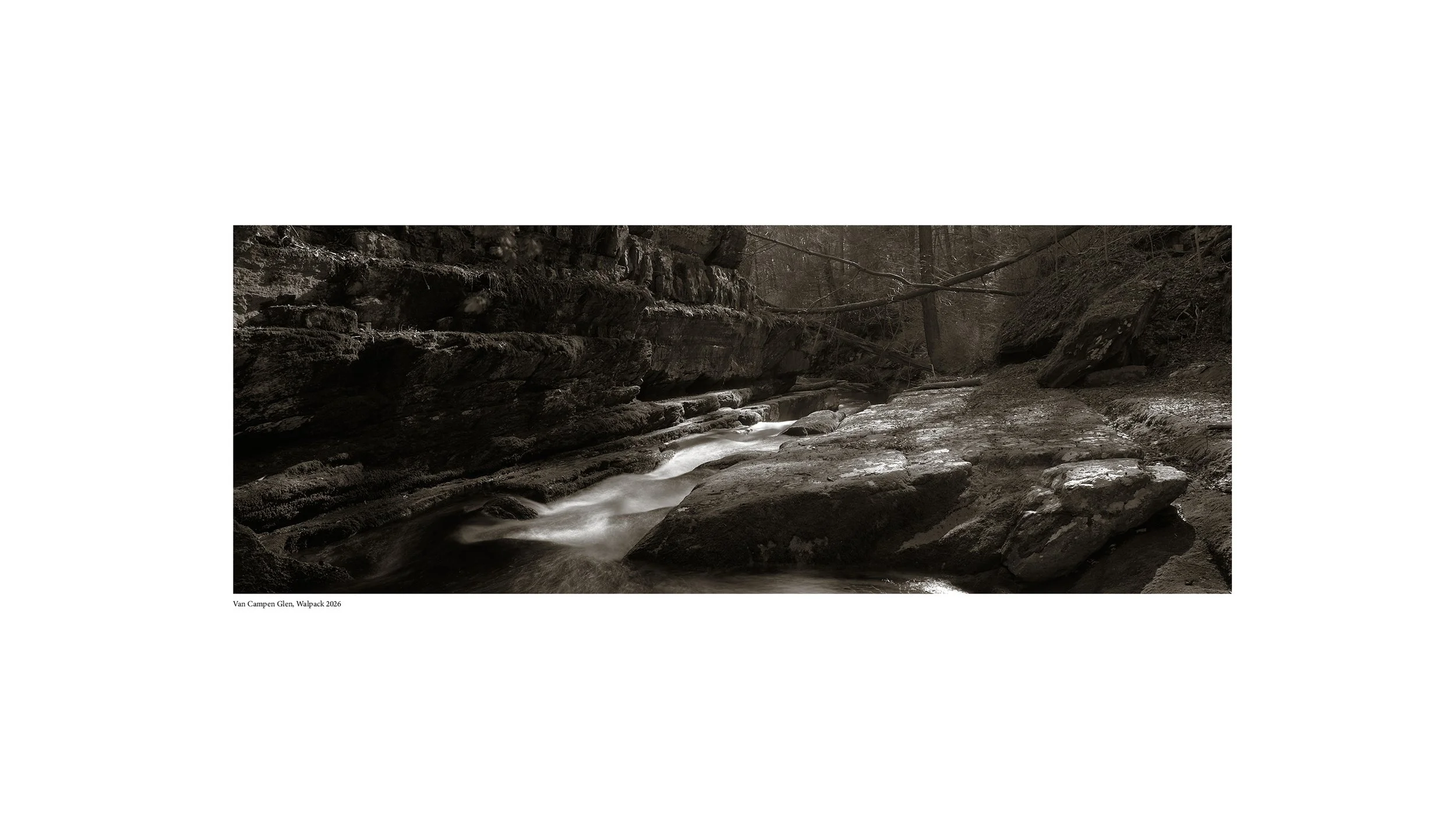
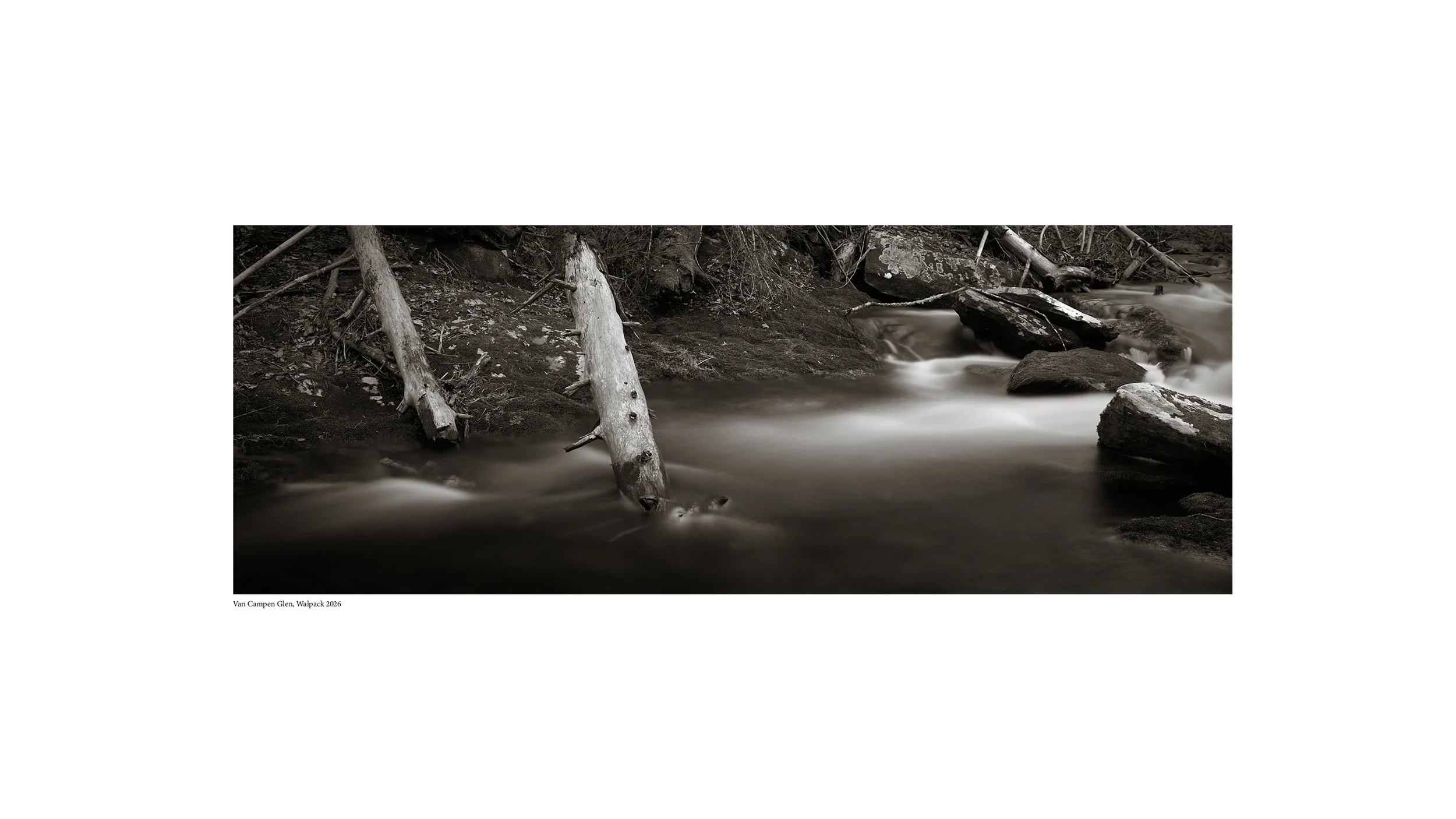
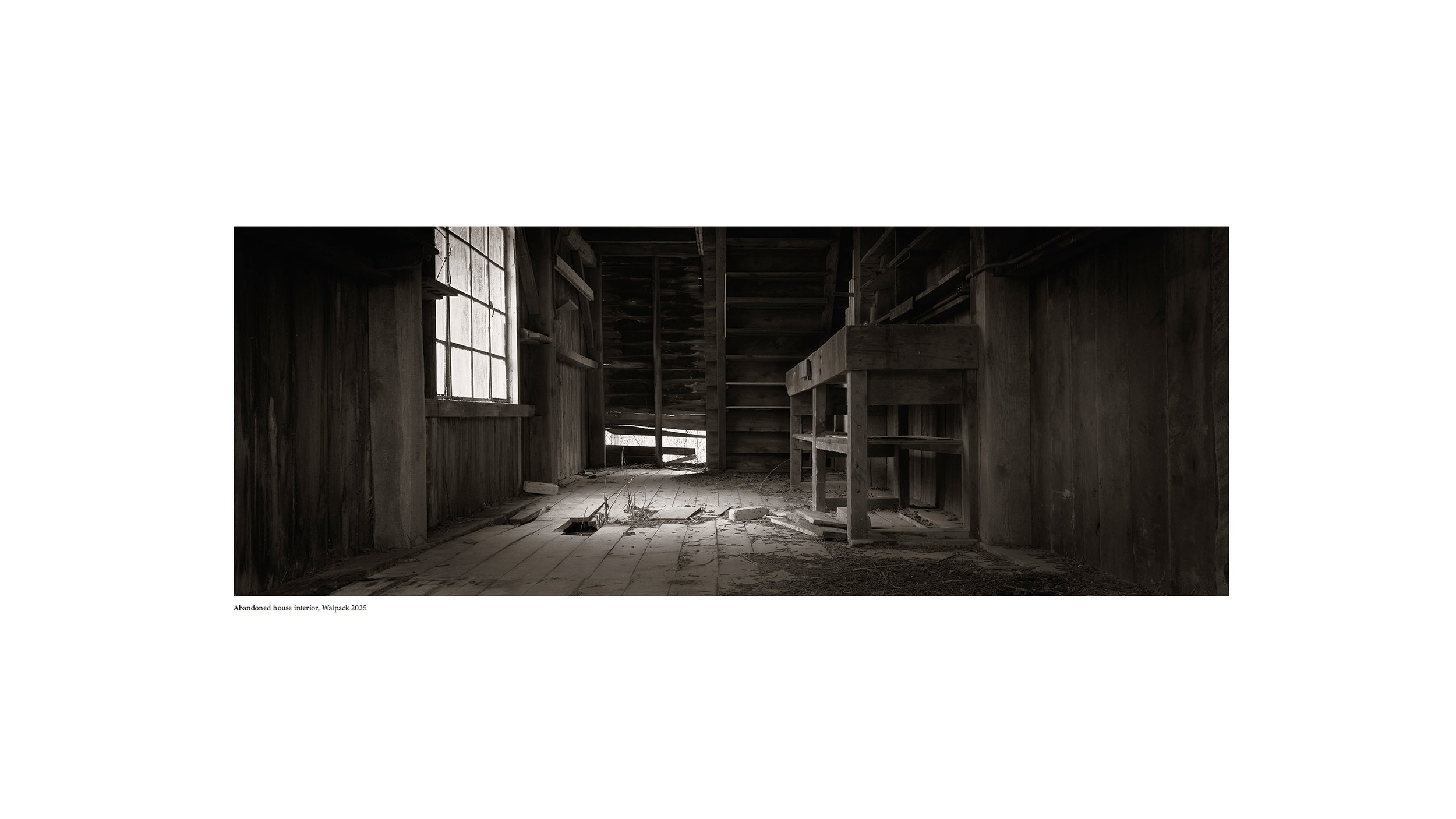
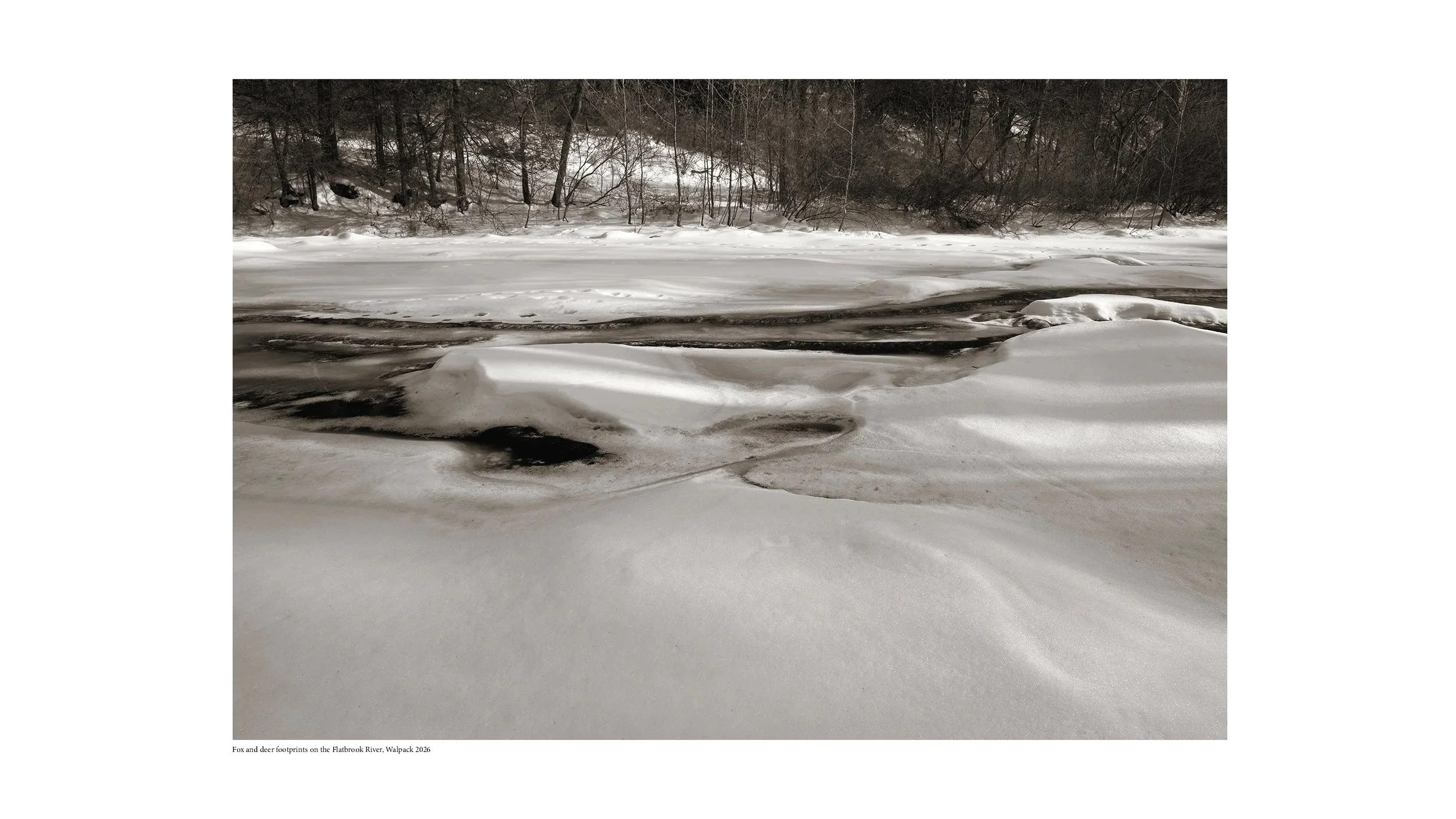
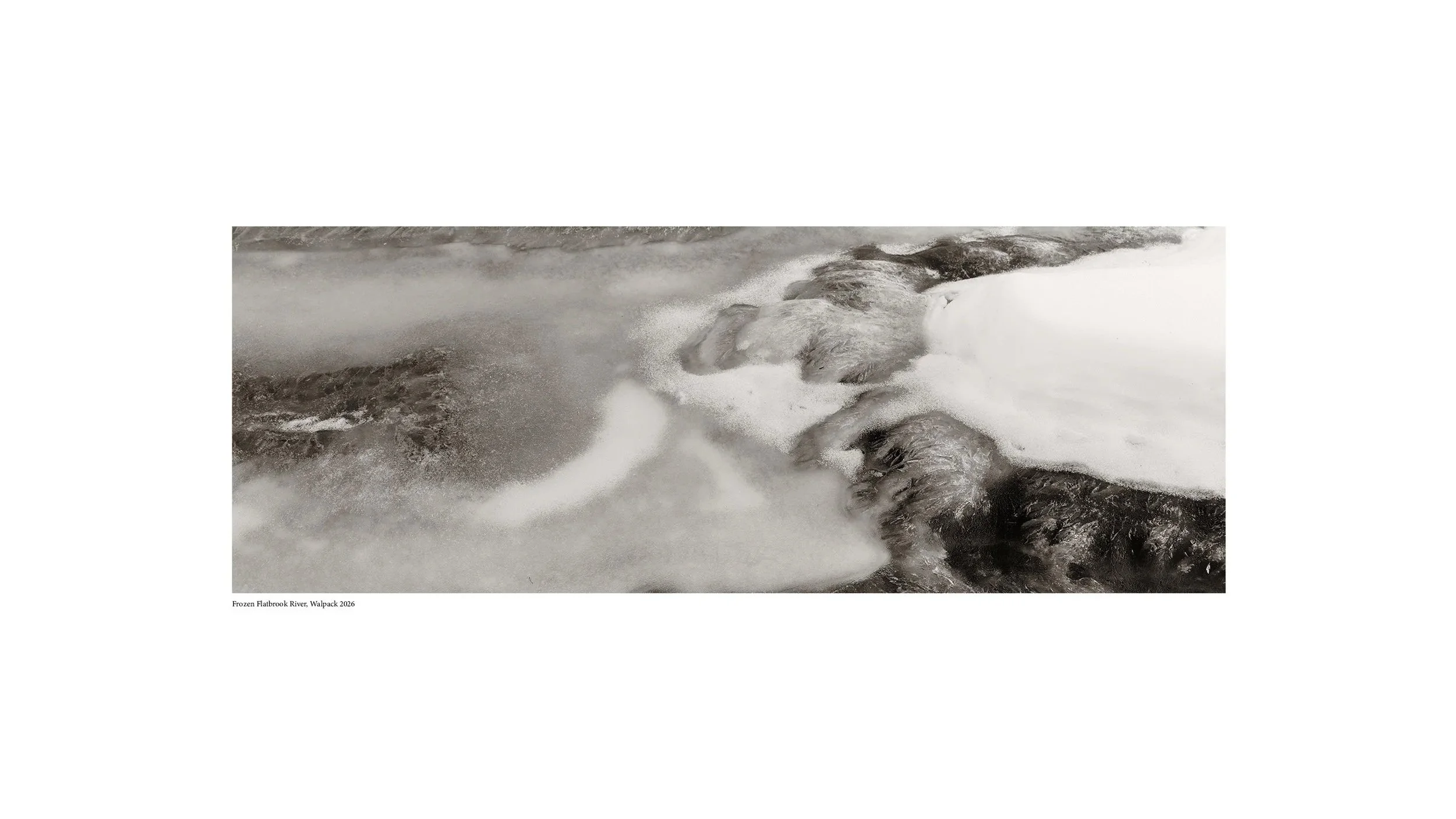
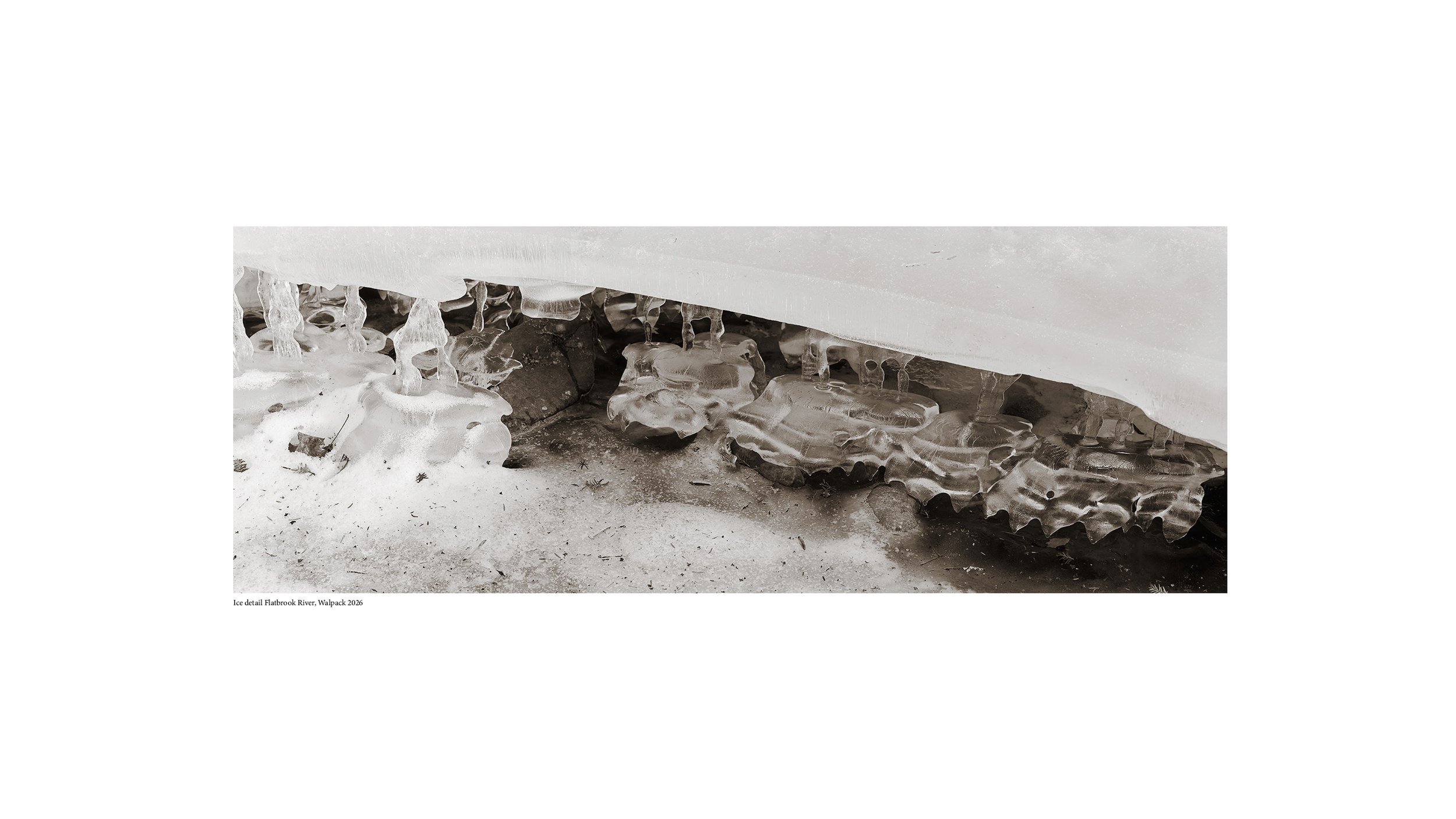
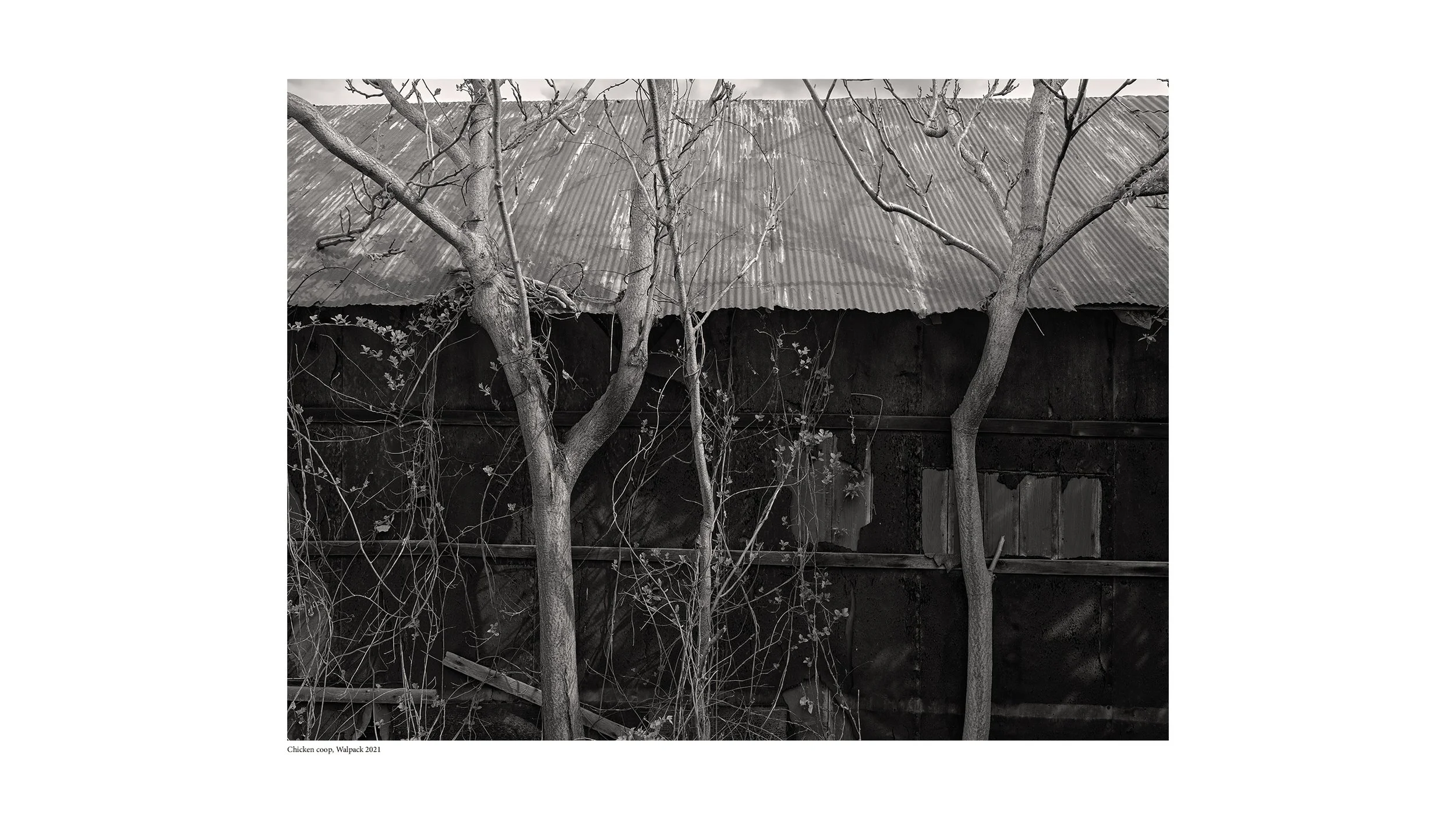
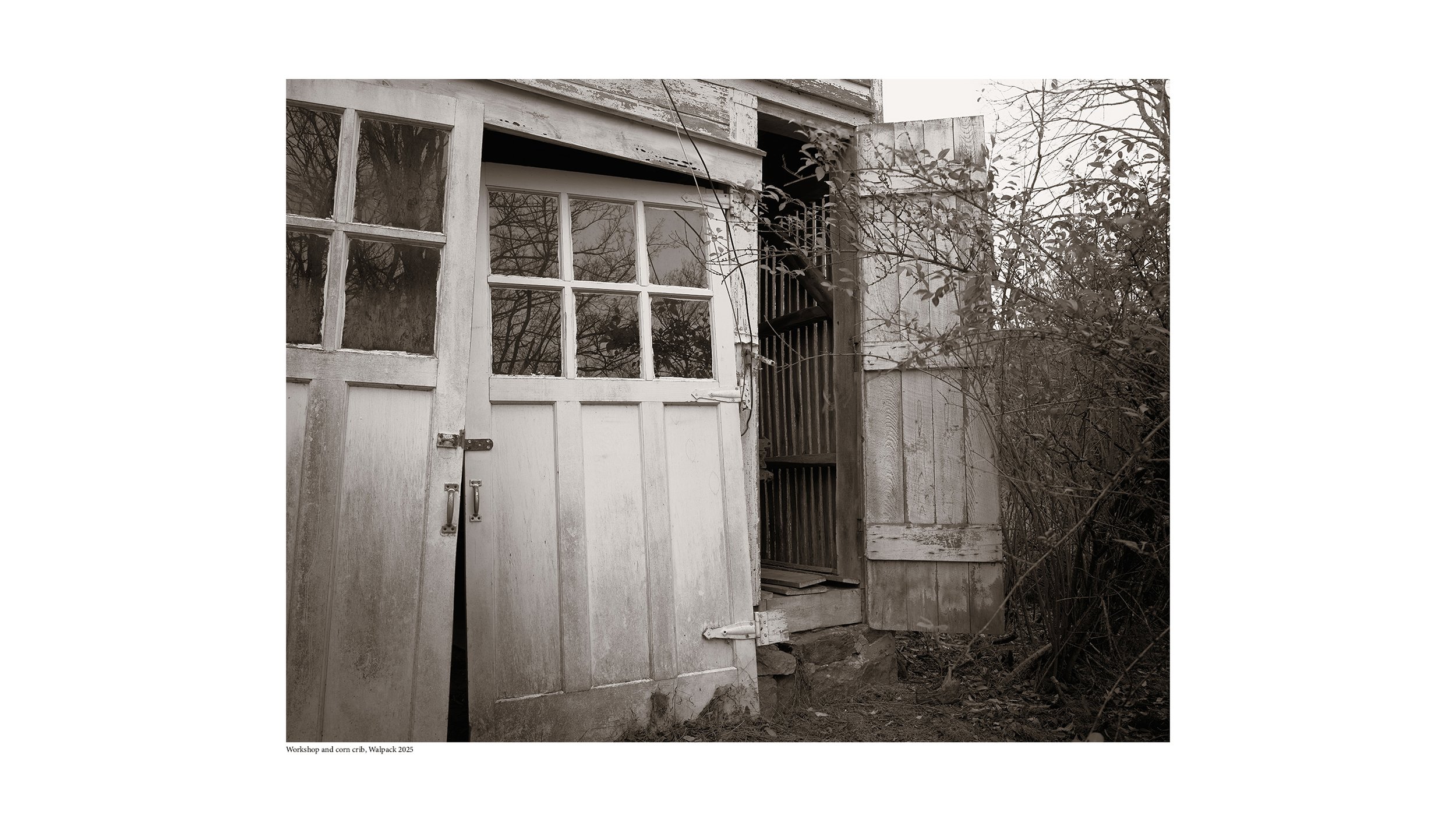
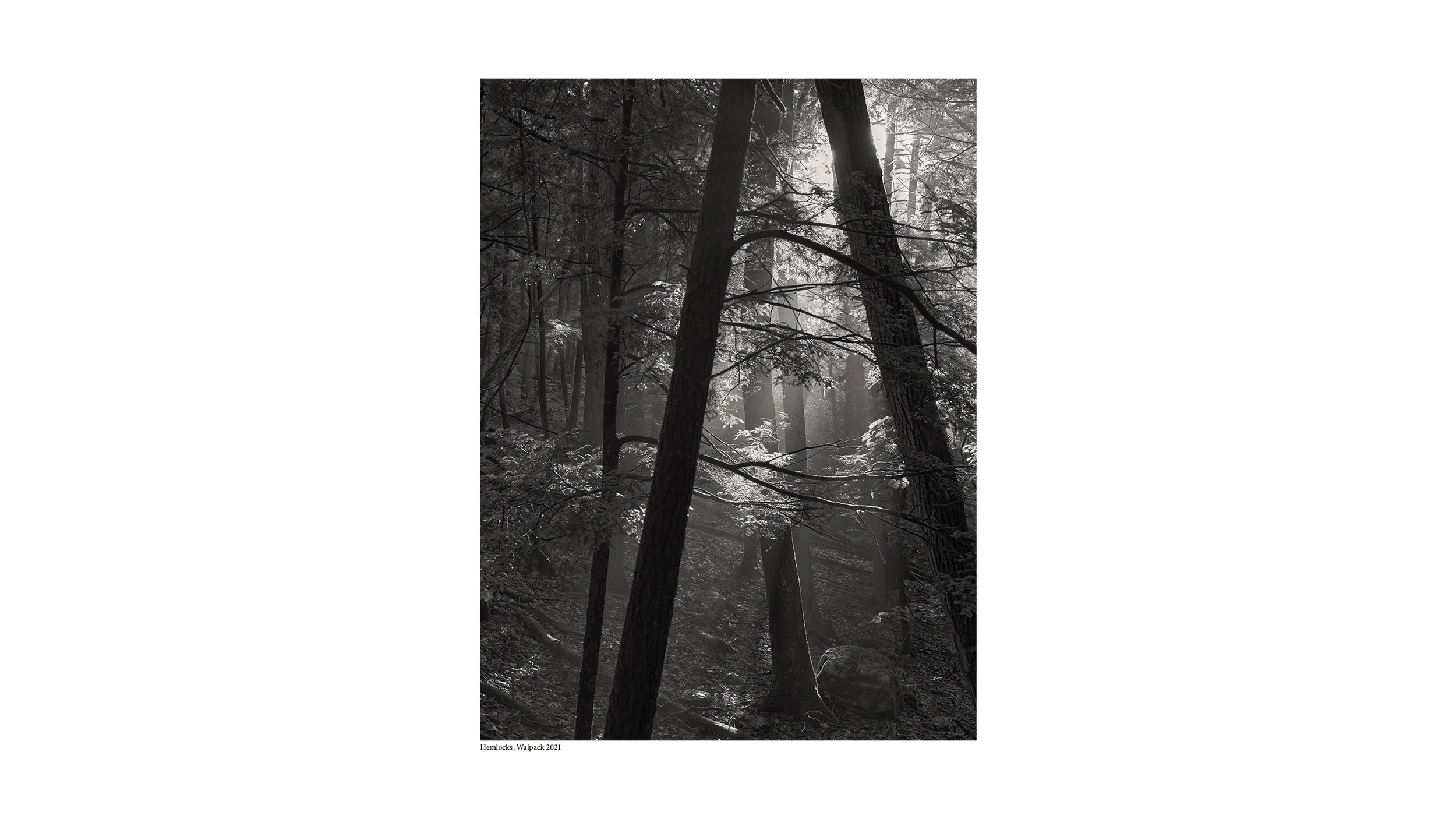
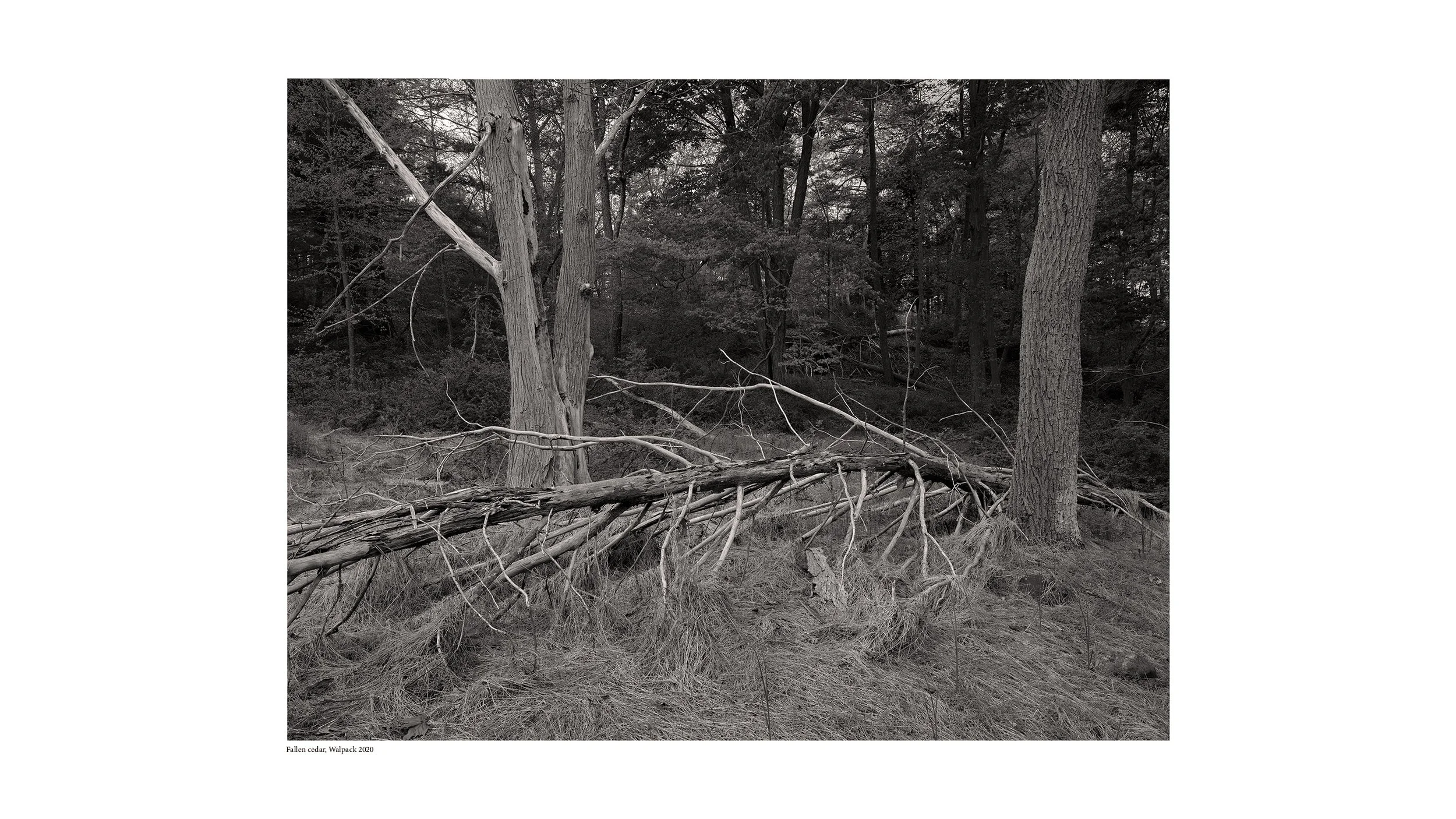
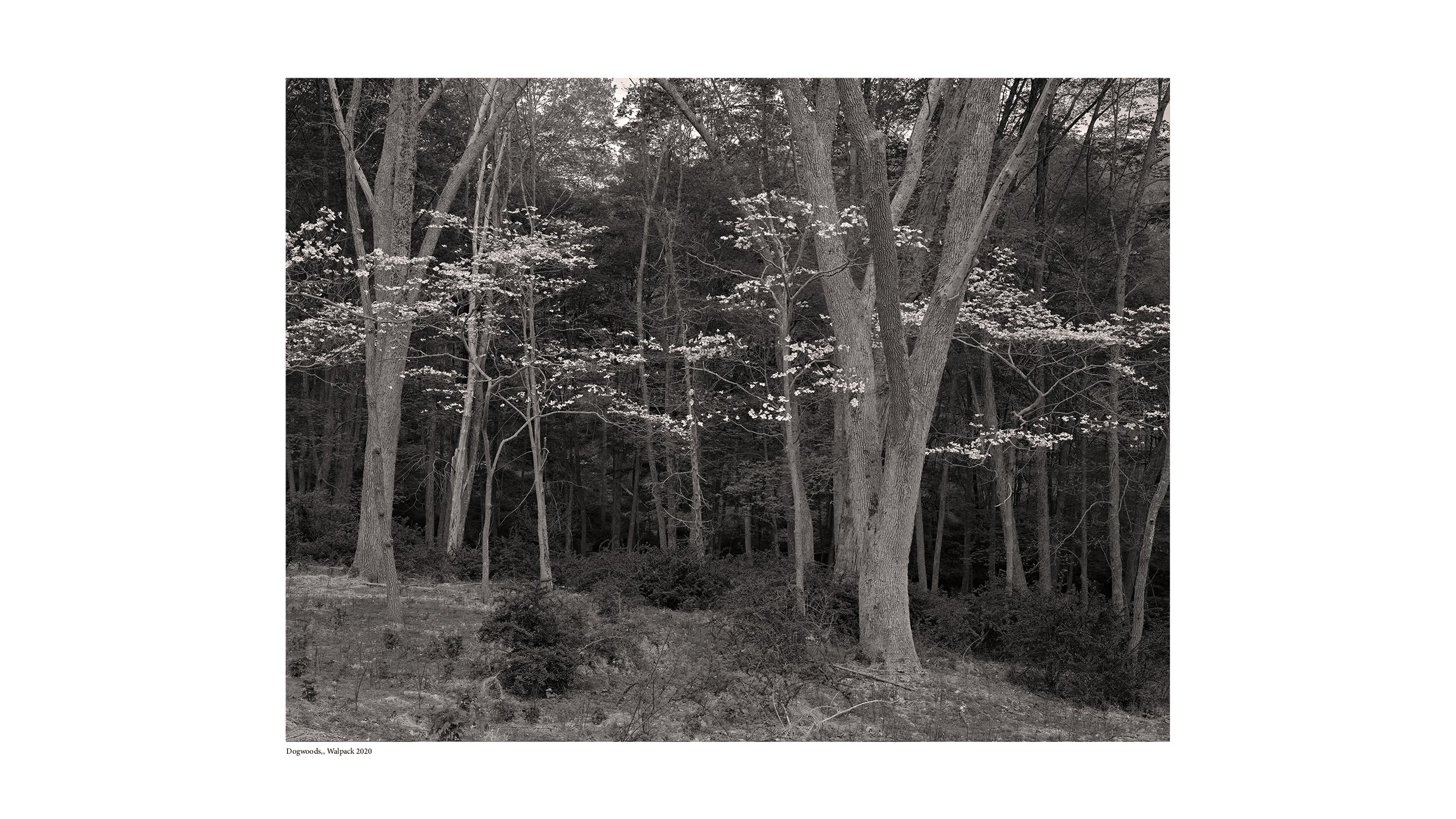
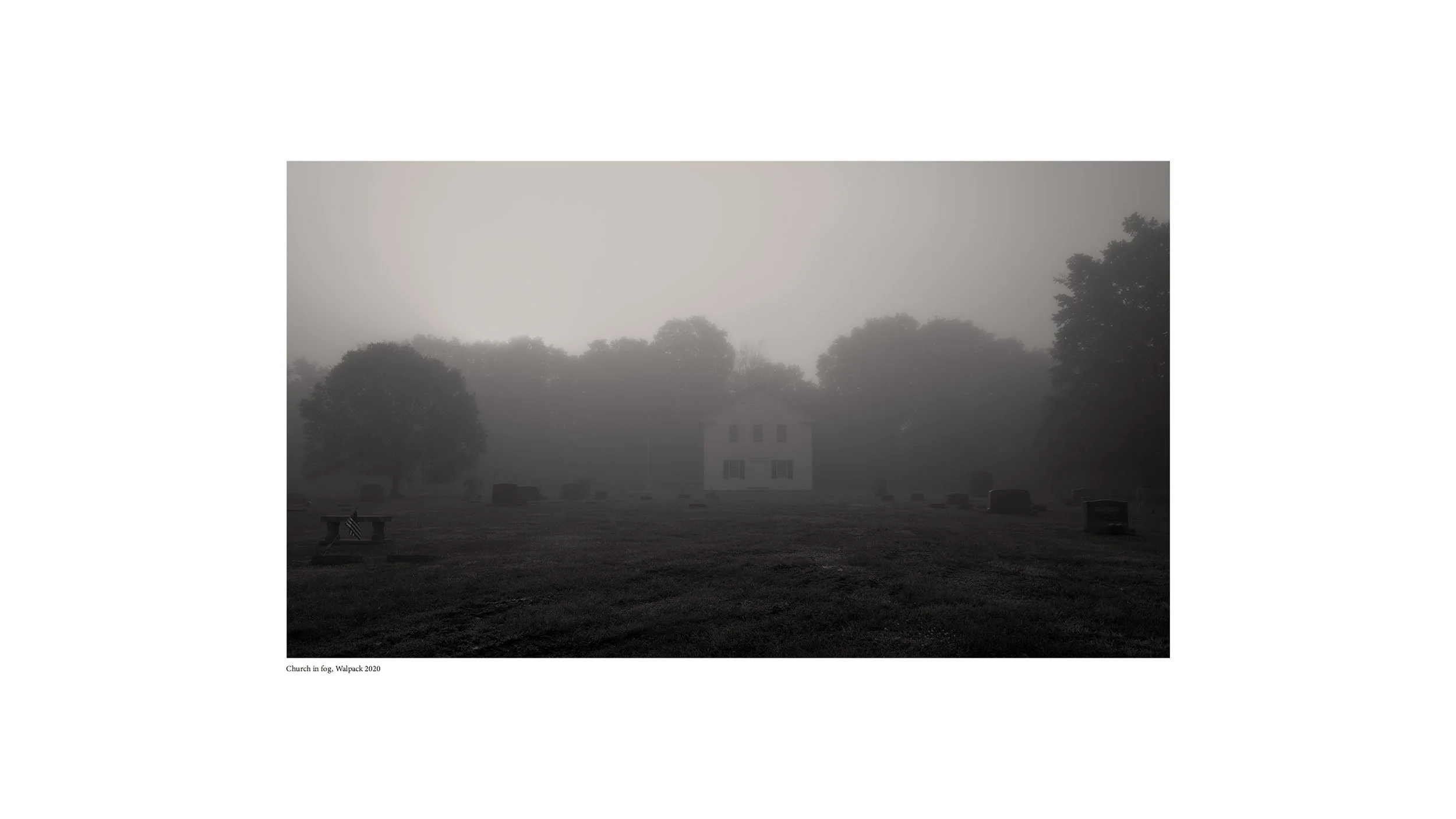
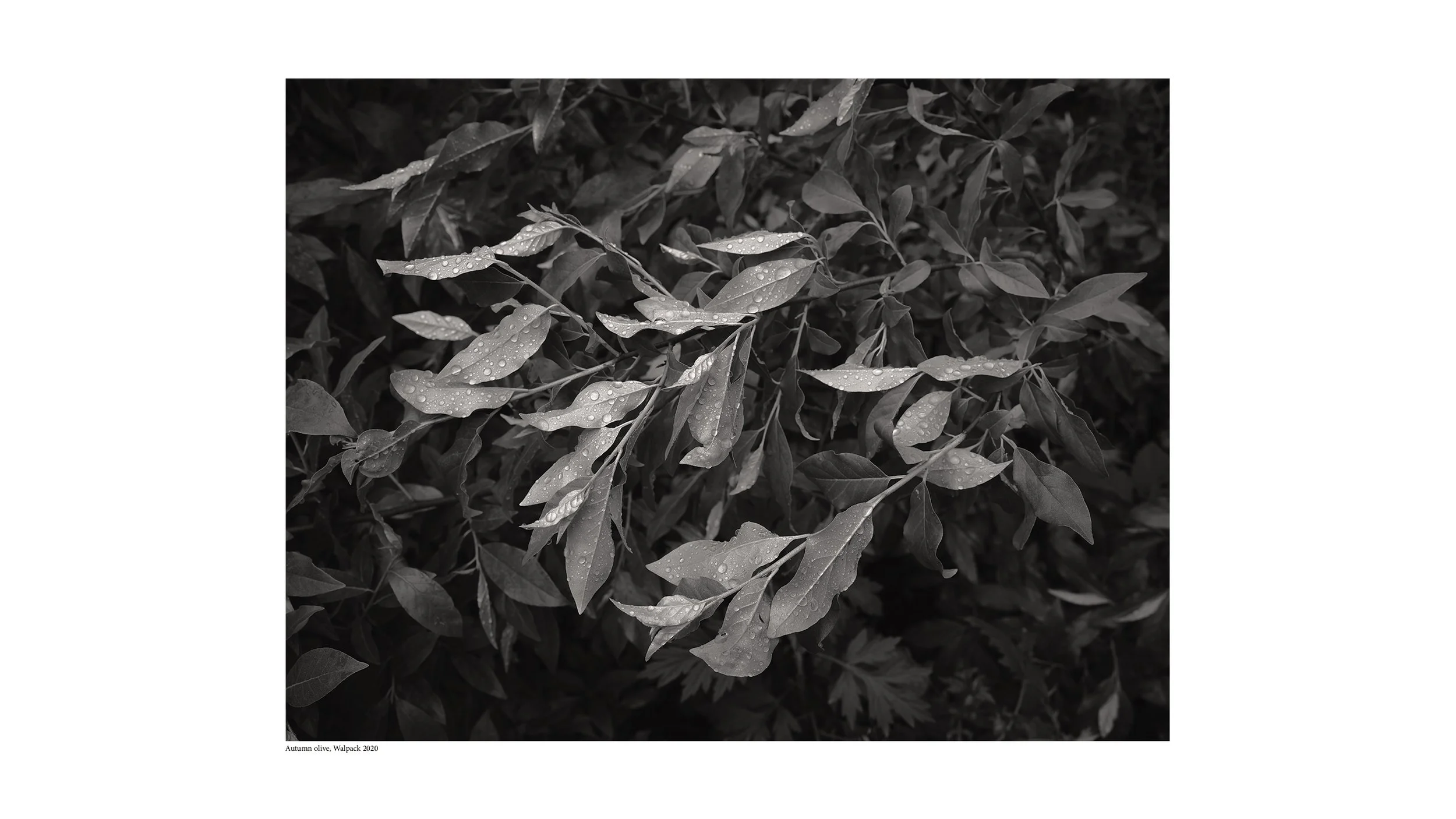
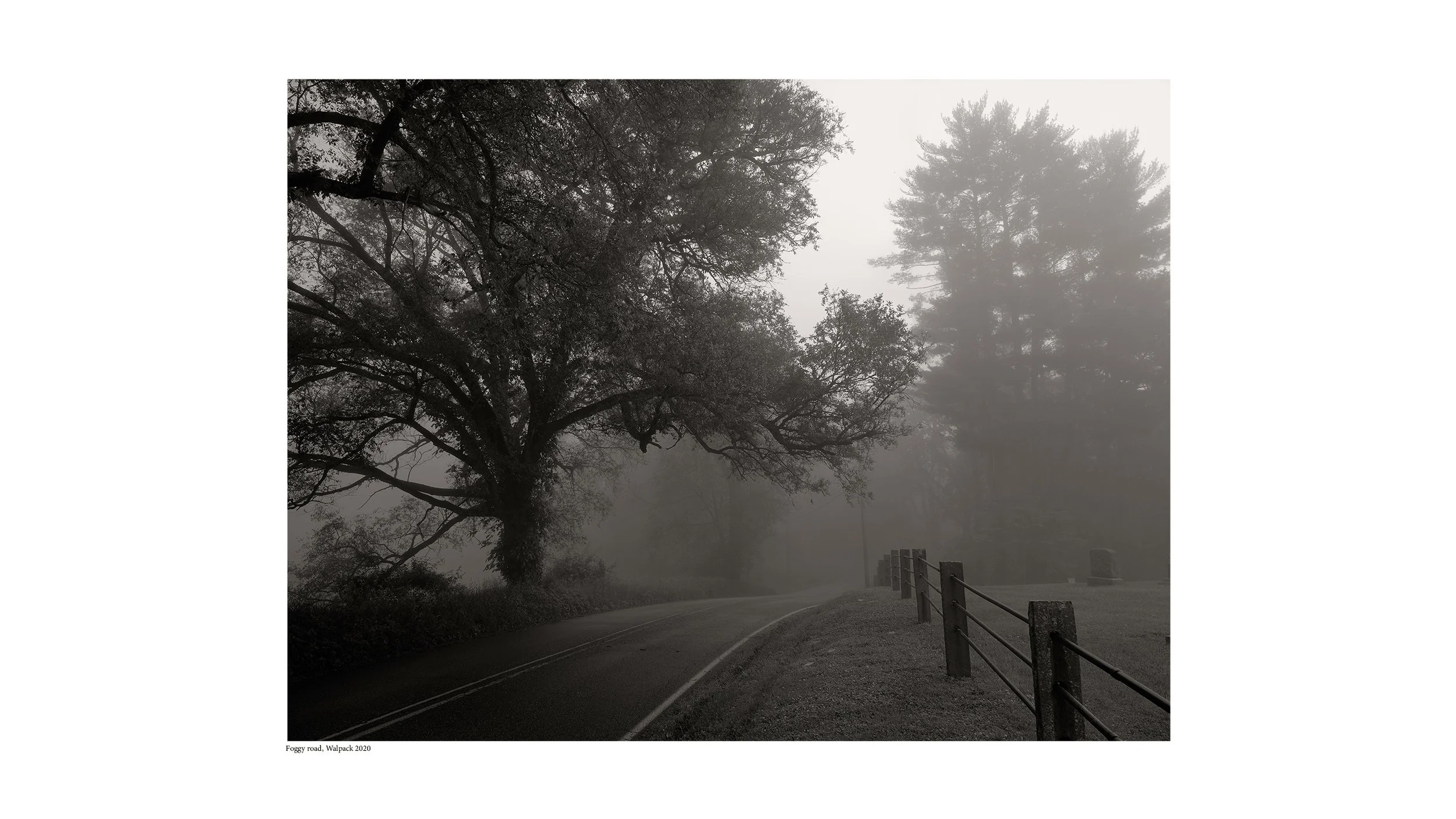
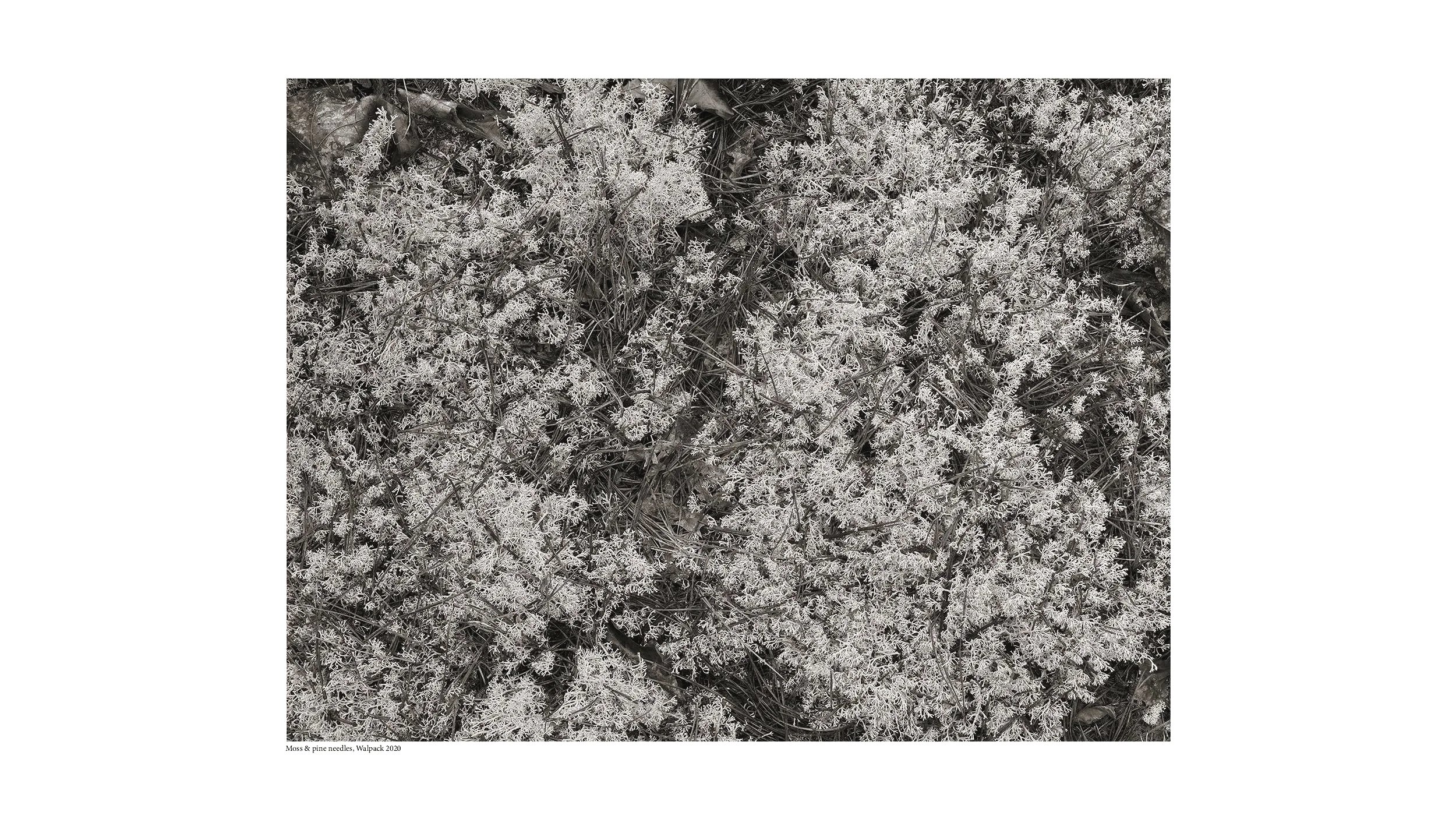
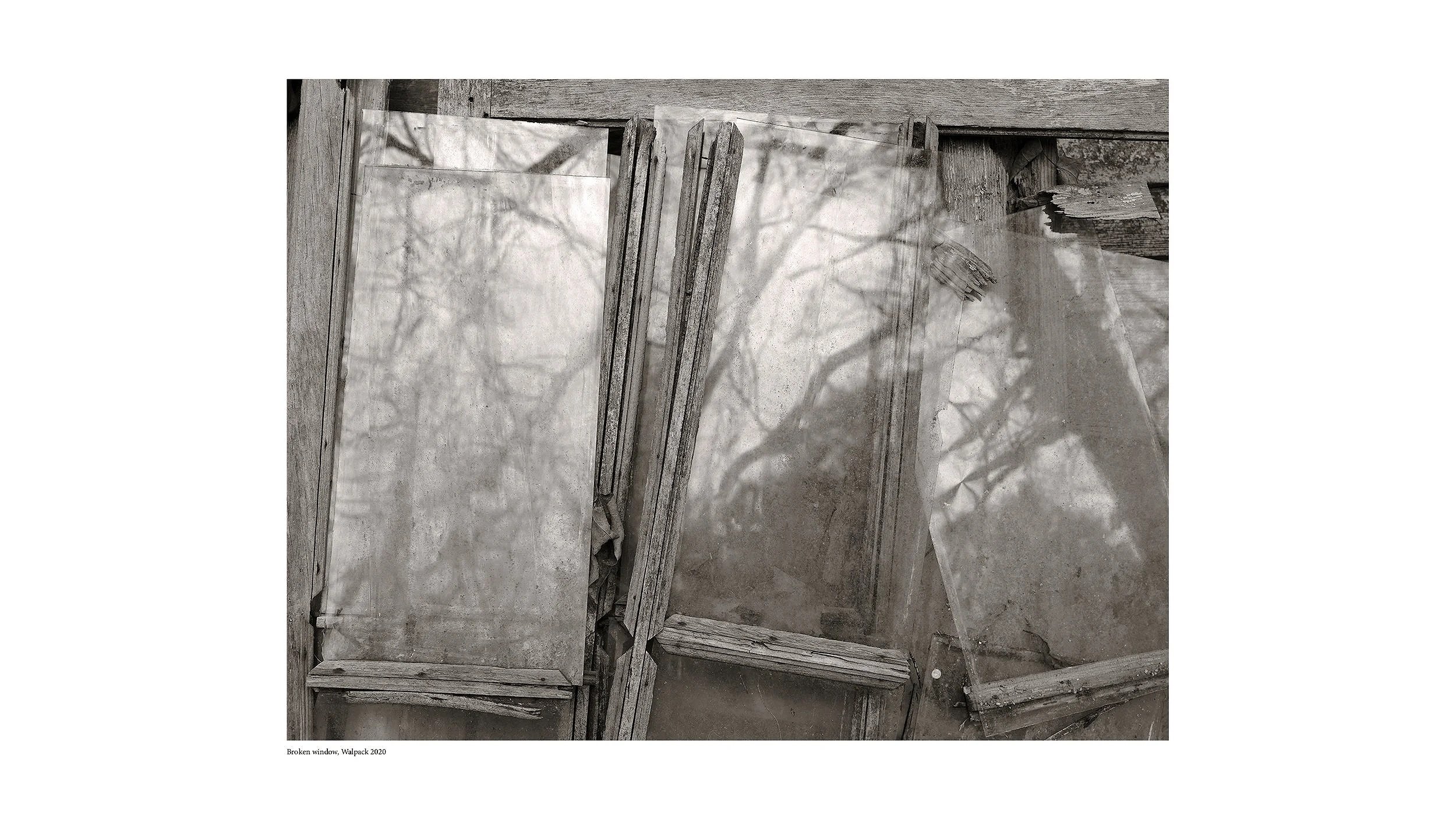
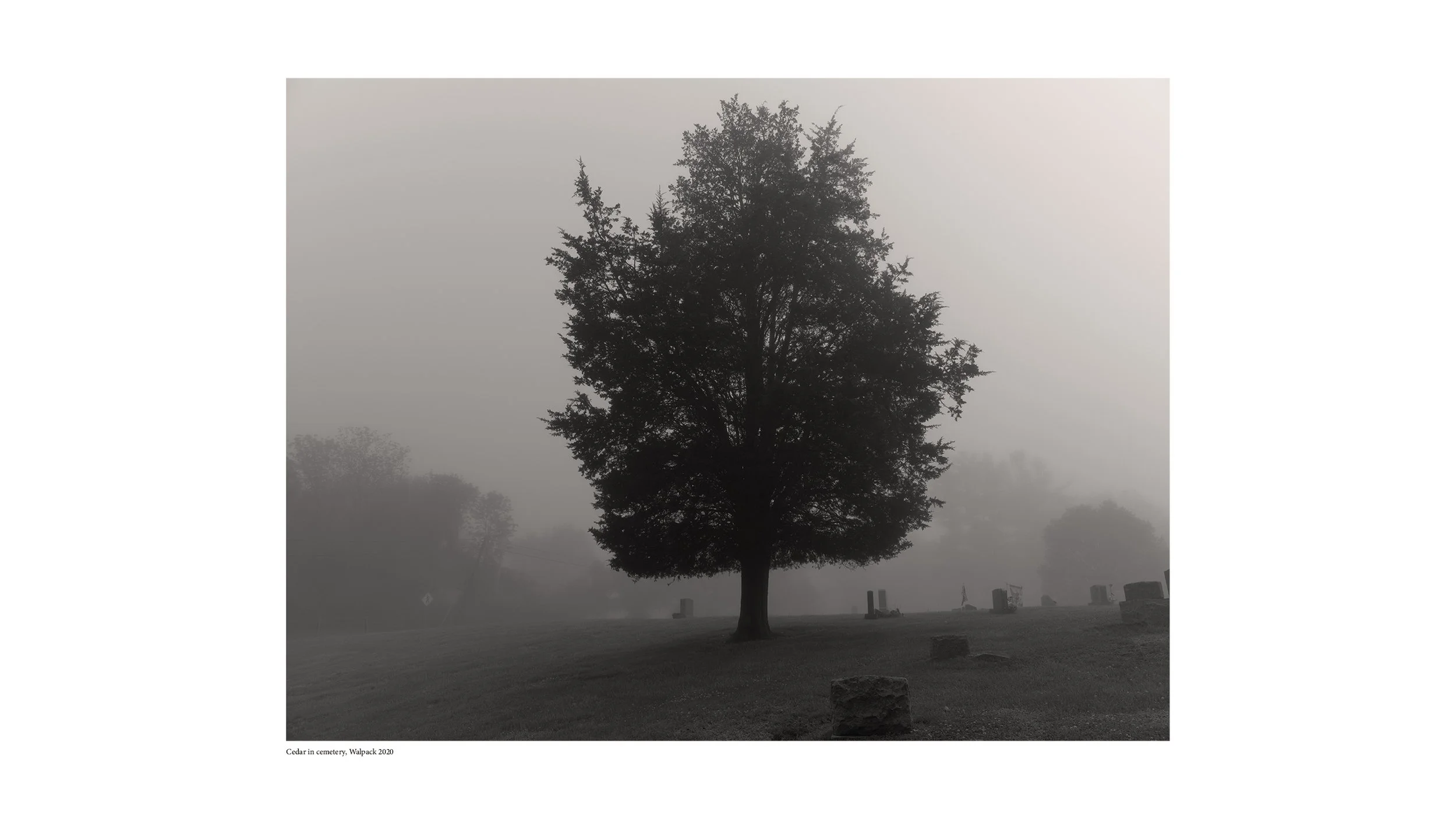
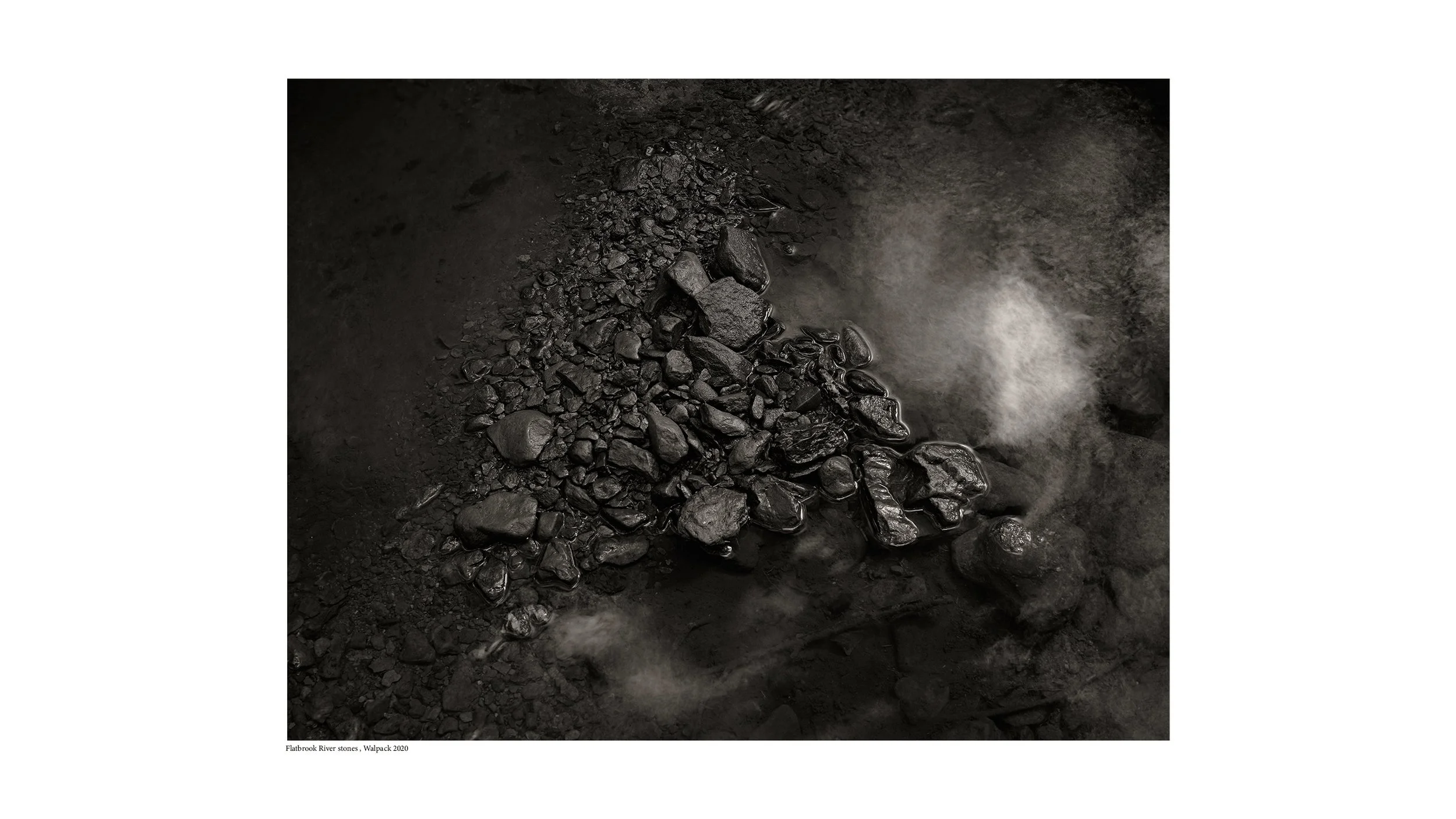
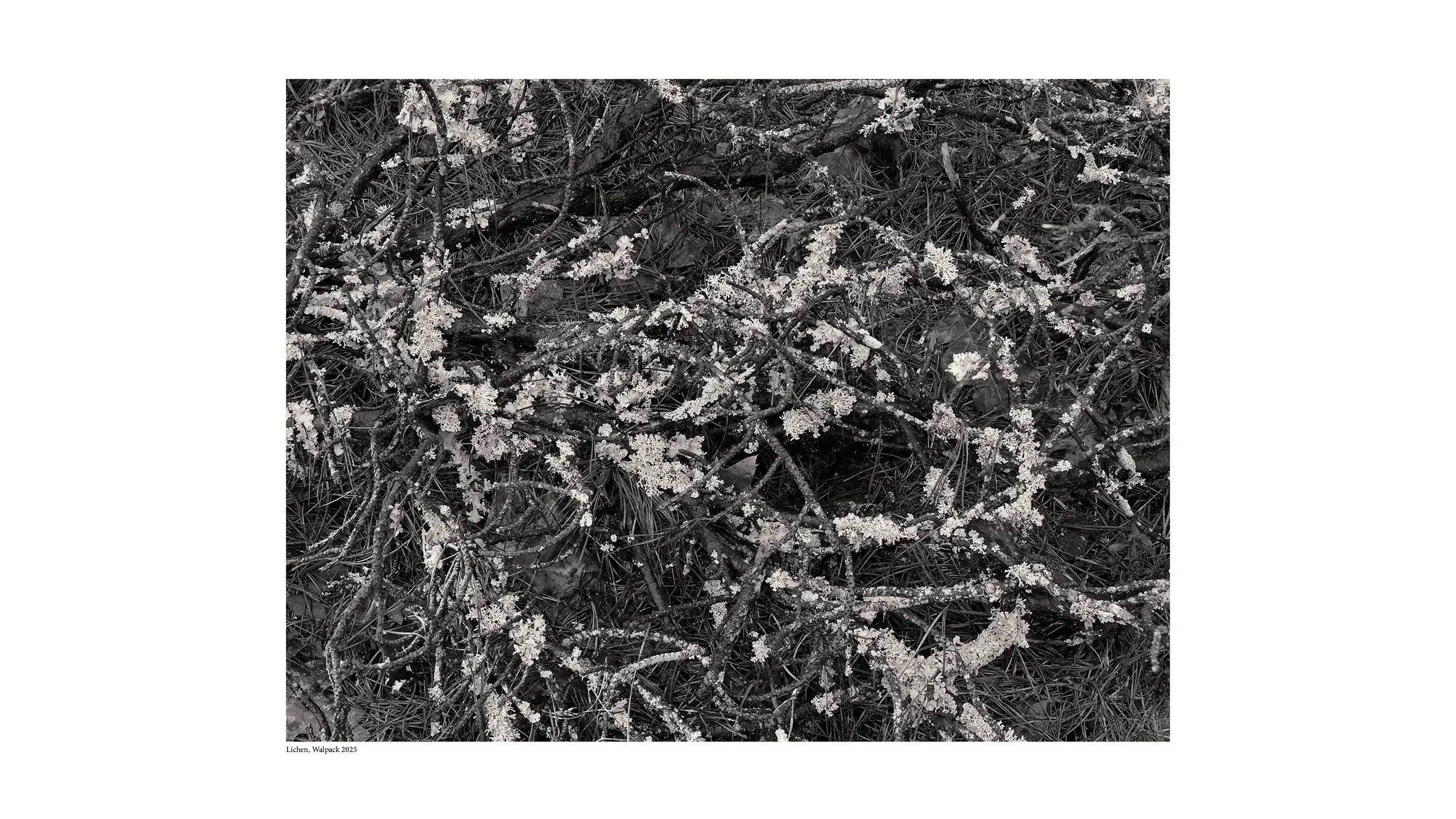
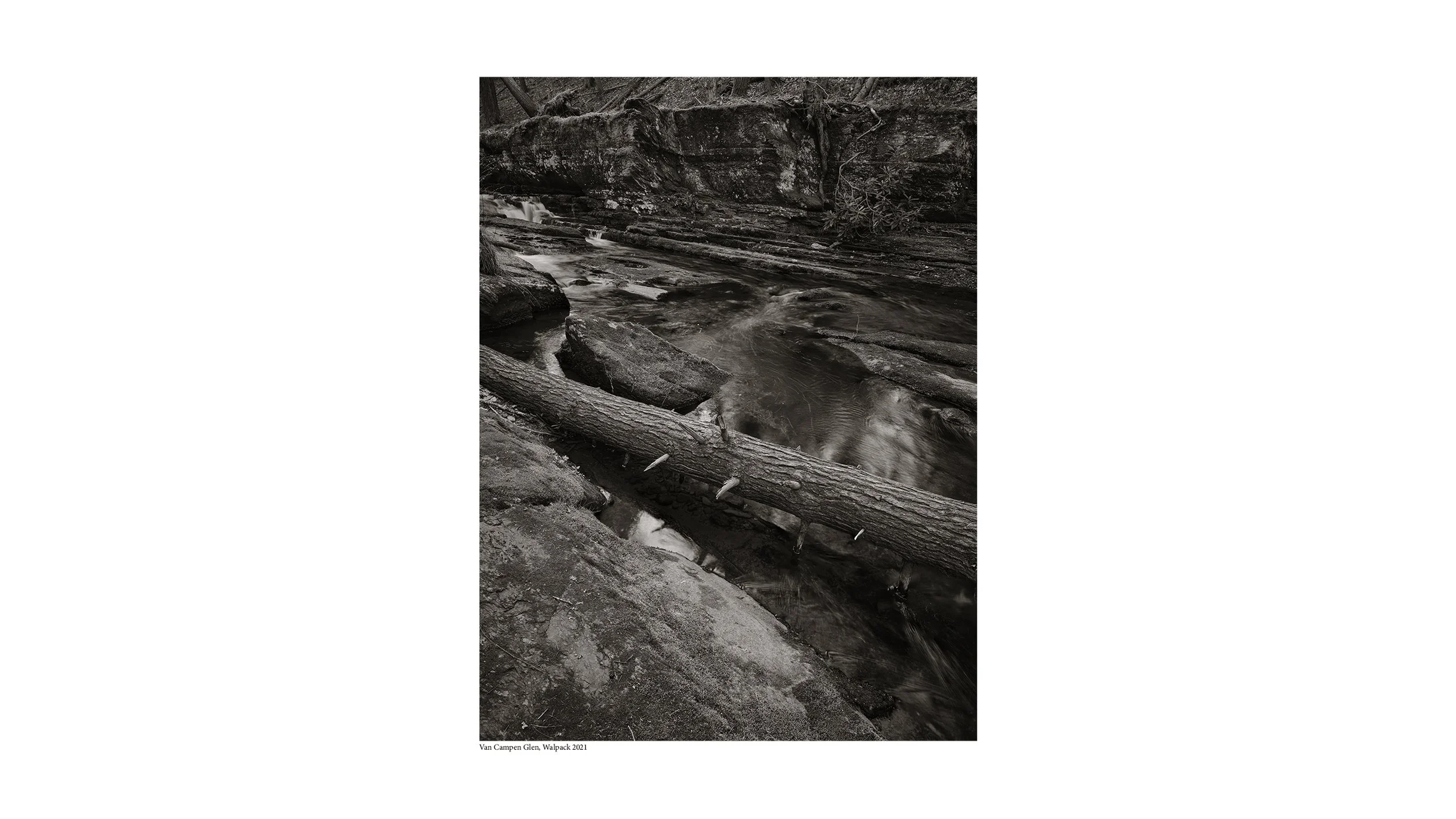
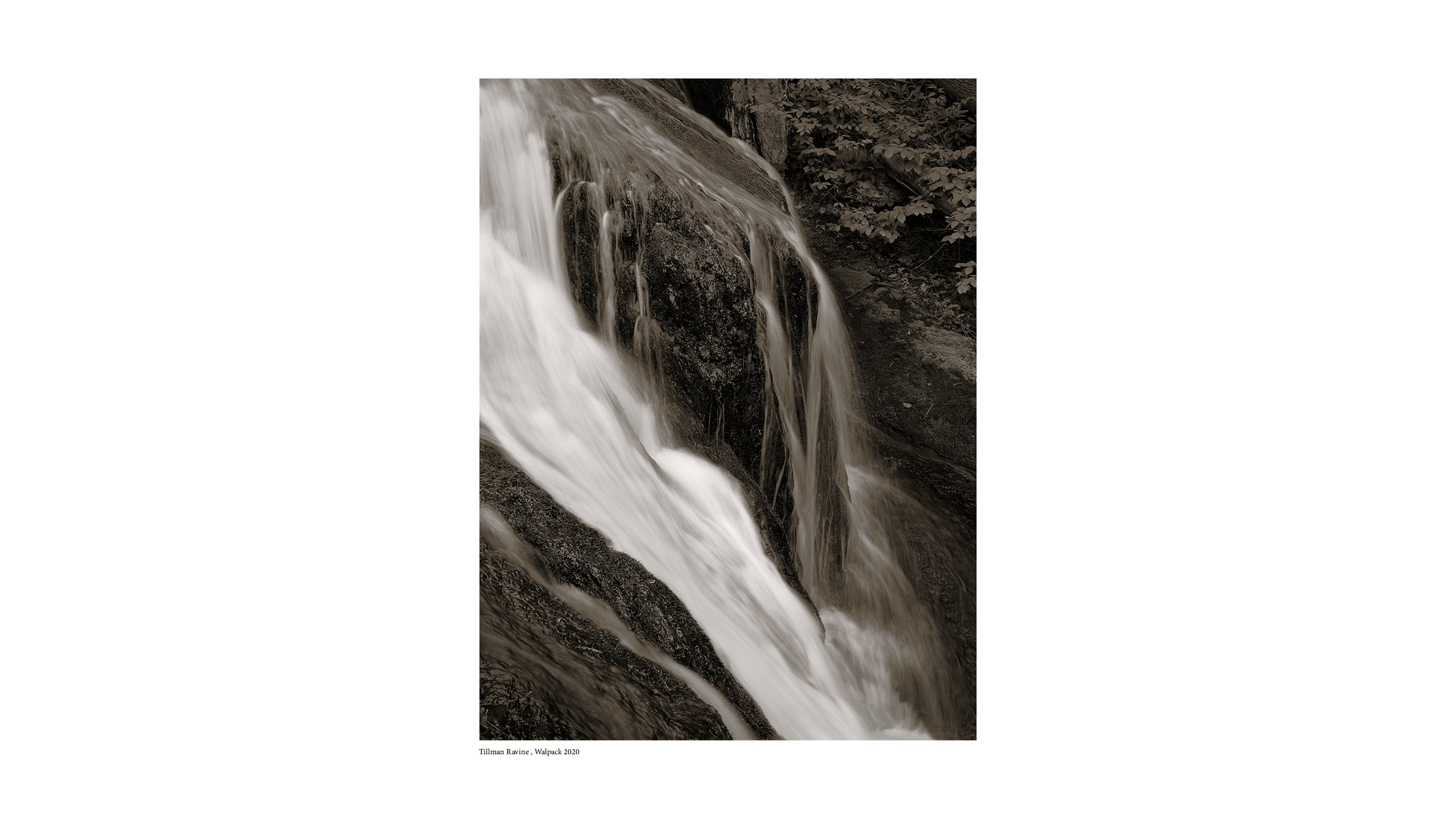
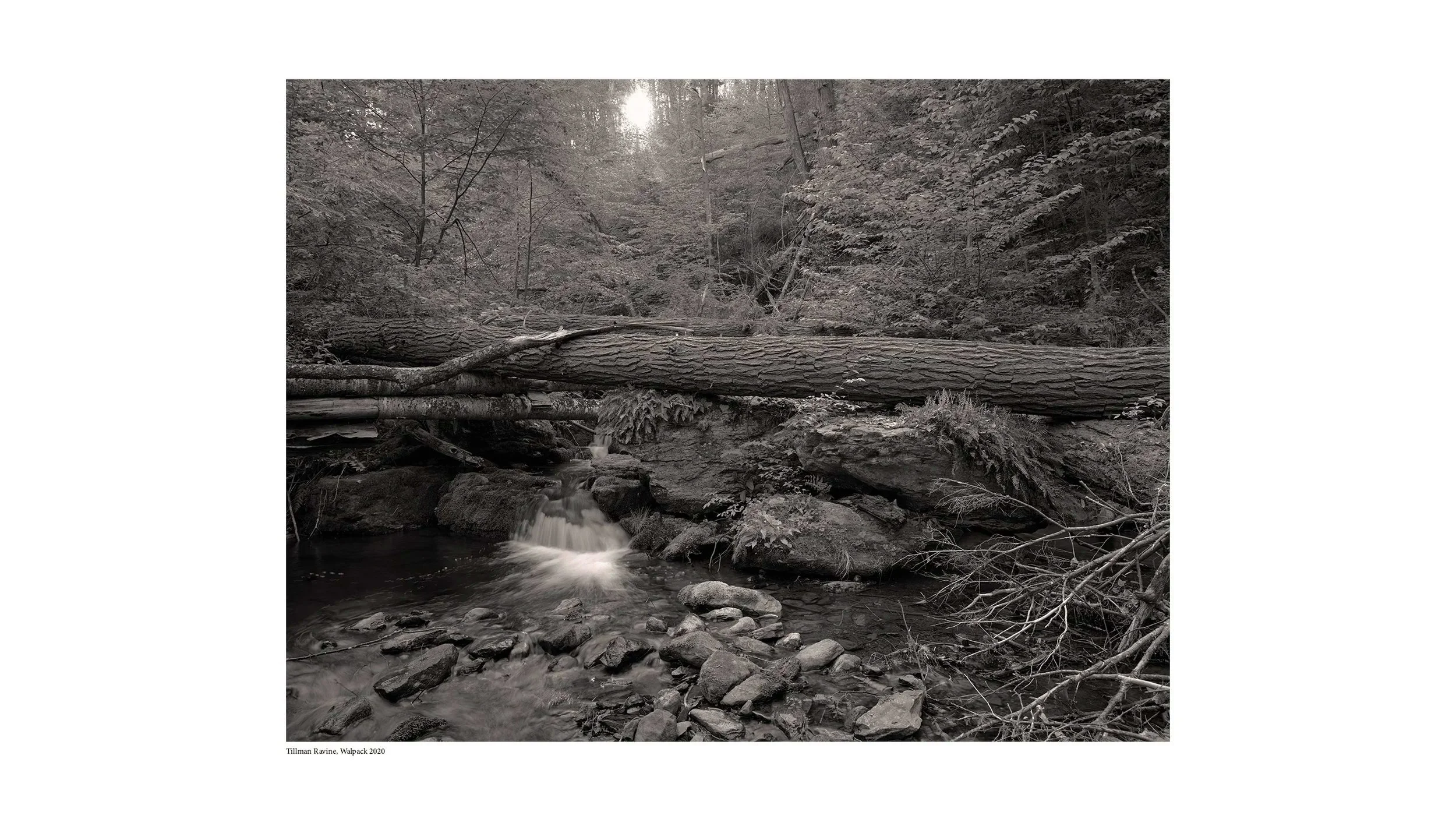
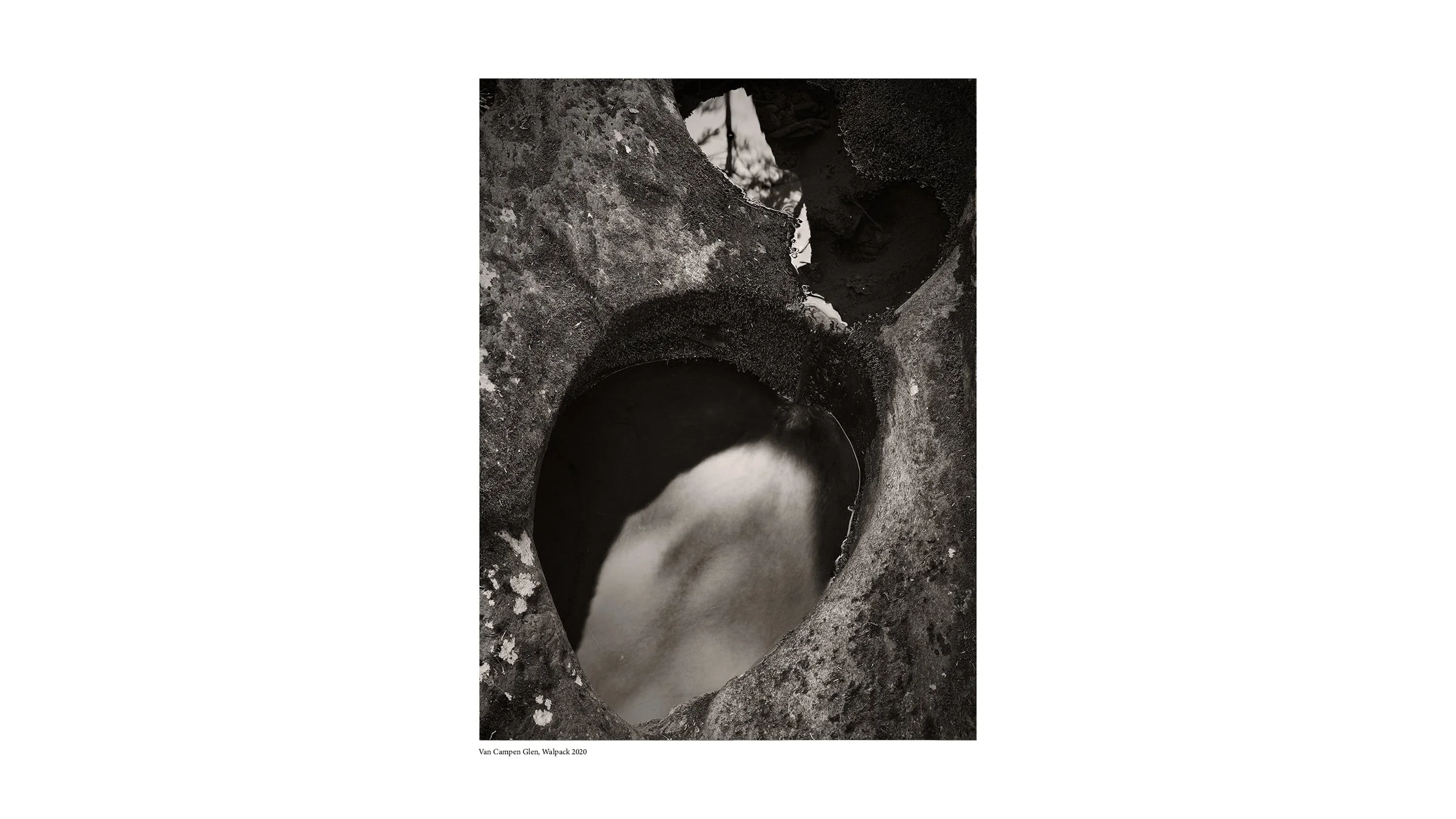
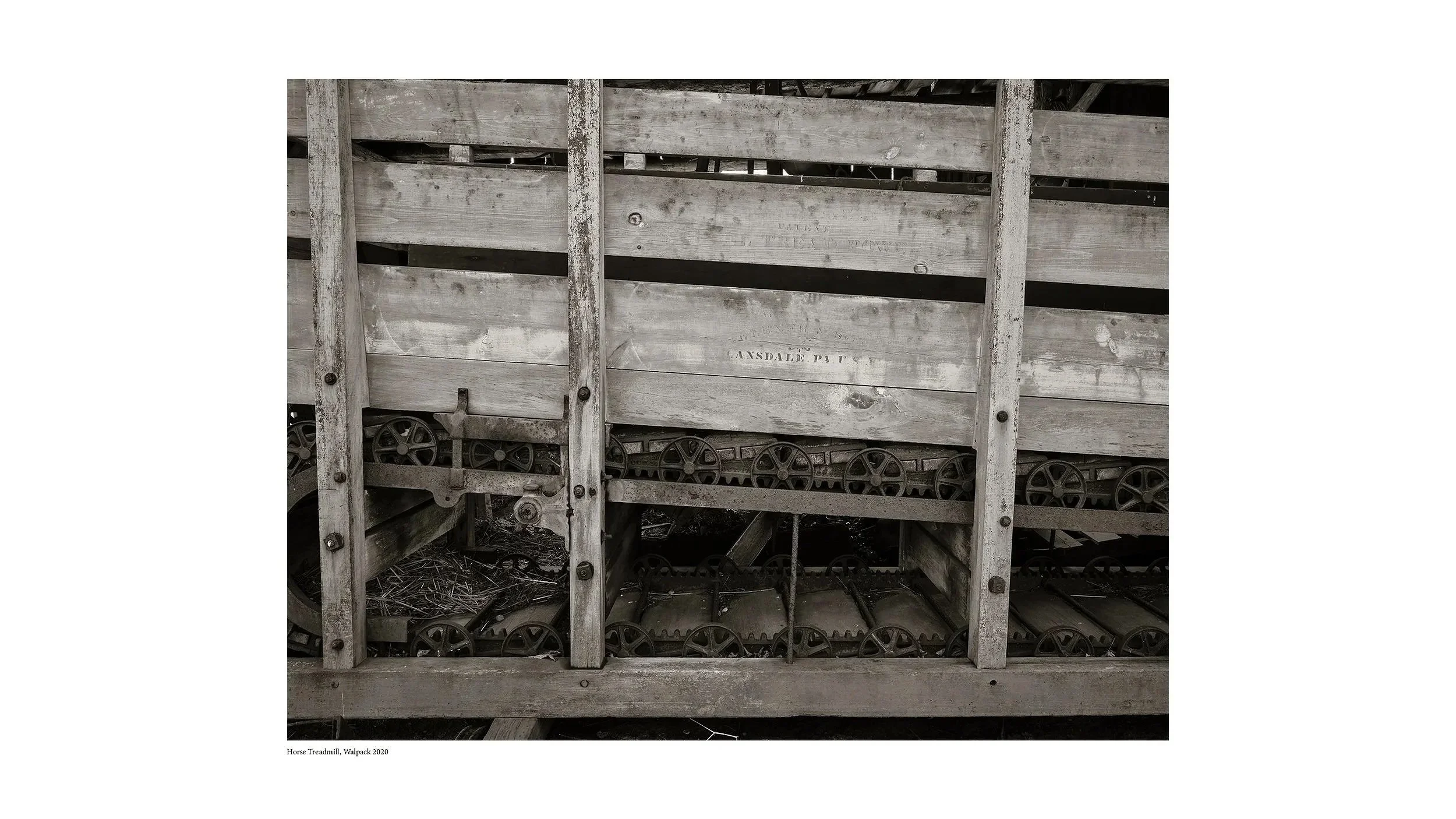
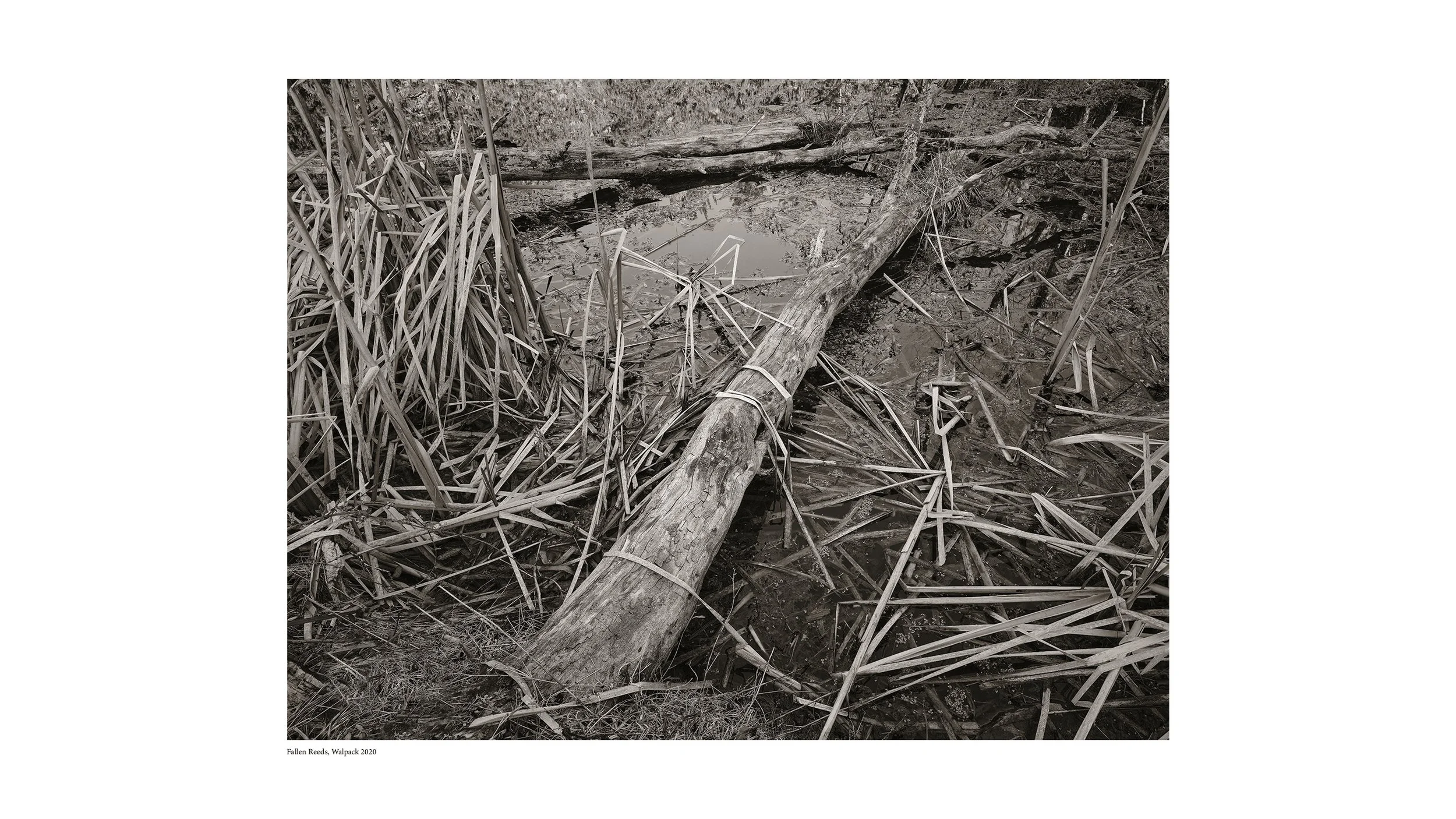
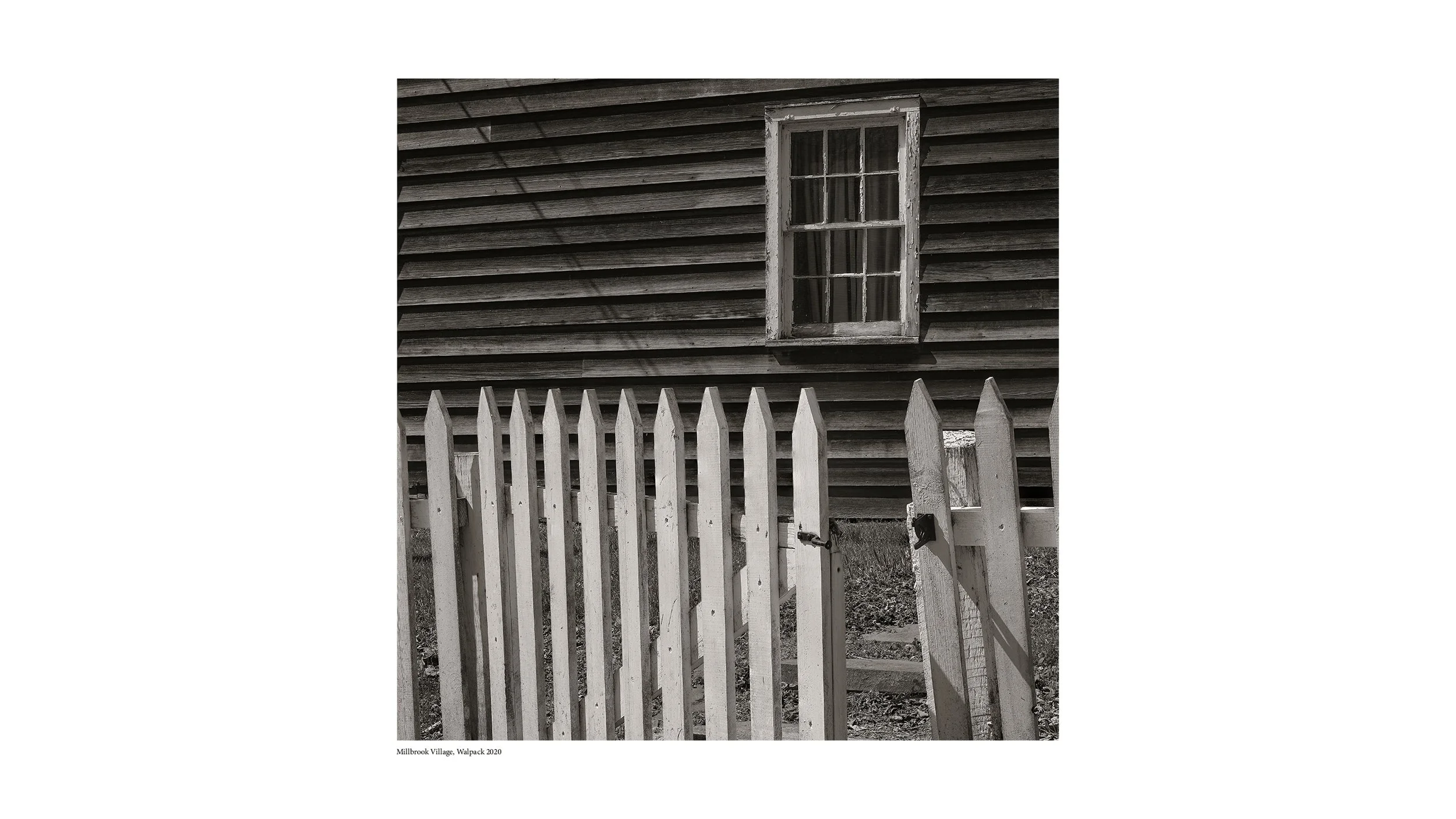
This work was made in the quiet blue hours, before the sun remembers the day, after it has already begun to forget, the valley softens and reveals itself slowly. This is the Walpack Valley, an ongoing study where my photographic journey began more than 27 years ago. It feels less like returning and more like a pull. Here, history rises uninvited, once held in the ground, in the slow lean of trees, in silence between structures that no longer stand.
I have tried to meet it’s history in different ways: through ground glass and long exposures. Through silver, platinum, absence, books, grain— and now through pixels that still reach for something older. My work moves away from spectacle and the idea of the grand landscape, leaning instead toward something quieter. It’s a presence that only begins to emerge through time and repeated attention. The long tonal range in these images echoes the language of my earlier work—rooted in large format film and extended through contemporary printing methods.
But the valley carries more than light.
Its history reaches back to the early 1600s, when Dutch settlers arrived, following Lenape paths pressed into earth long before roads. In blind speed Dutch hands cut through the forest, following ore and copper along the Delaware River. A township raised, then unsettled. Water rising in memory before it ever came to be. By the 1950s, the future came as a promise— The Tocks Island Dam project—a proposal to flood the valley by constructing a dam. Homes marked for disappearance. Lives reduced to the time it takes to gather what can be carried between your arms. Some left. Some were made to leave. In sorrow, some never saw the sun again. The Tocks Island Dam project was eventually abandoned but the damaged remains.
That history lingers.
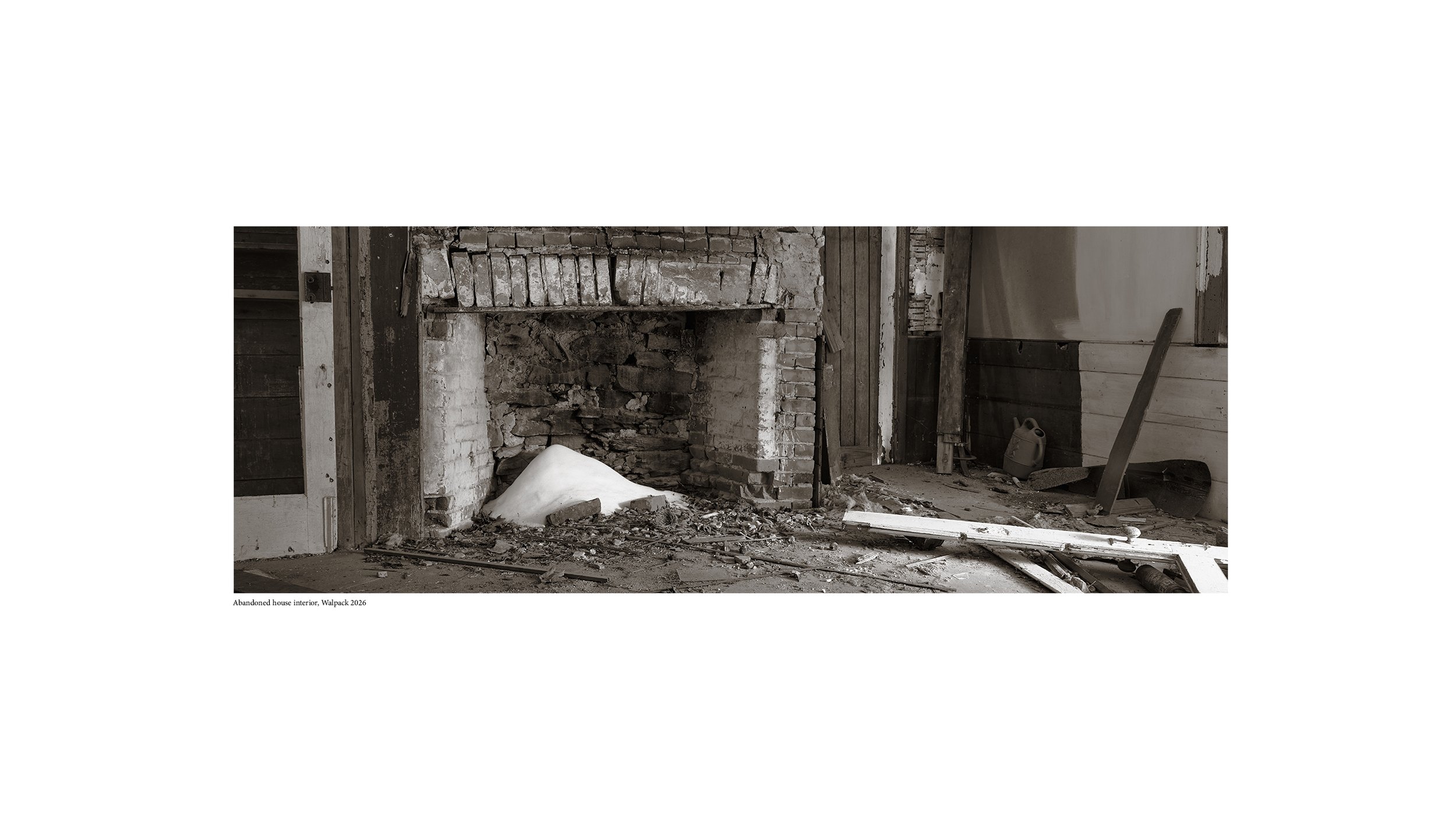
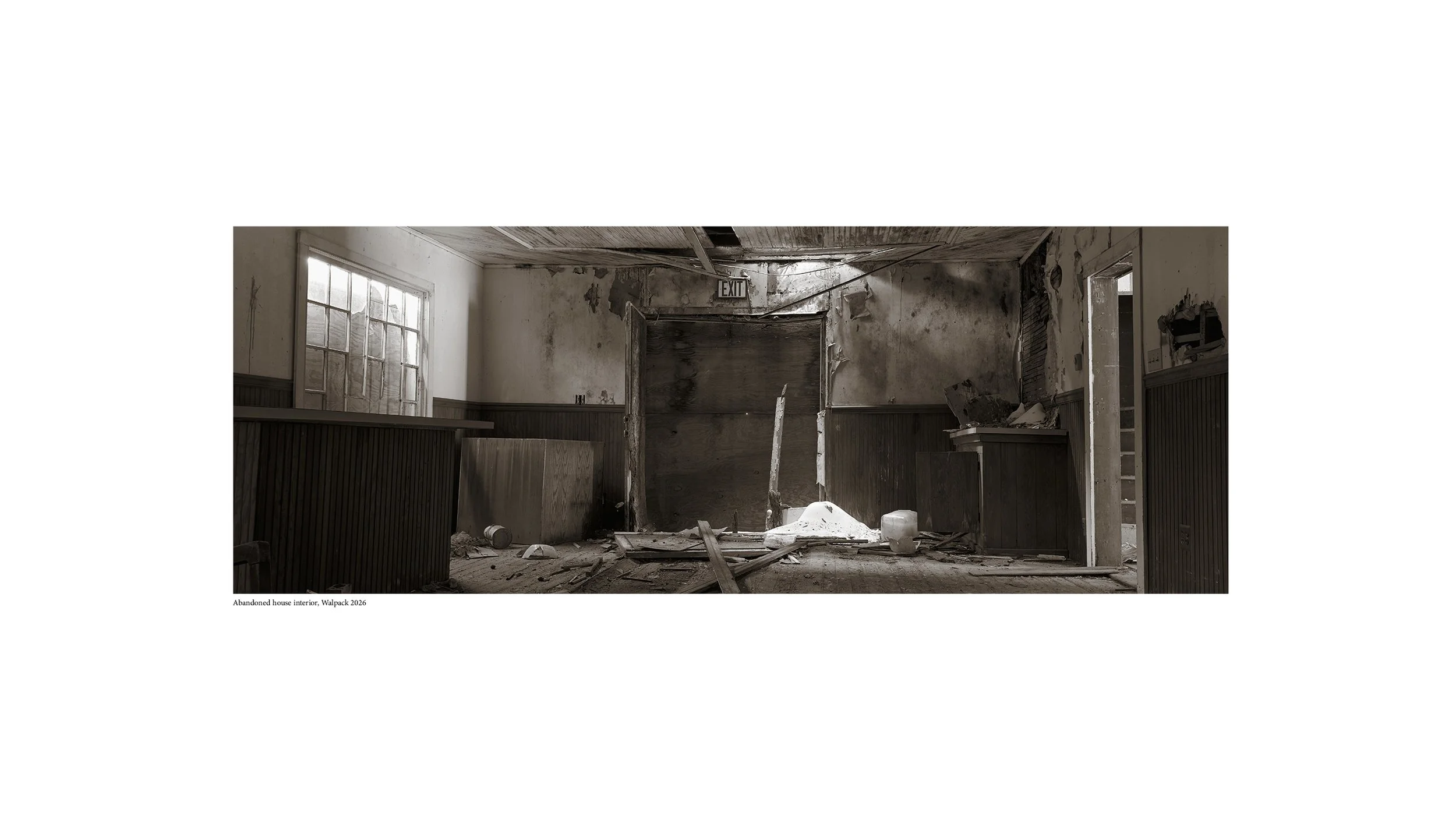
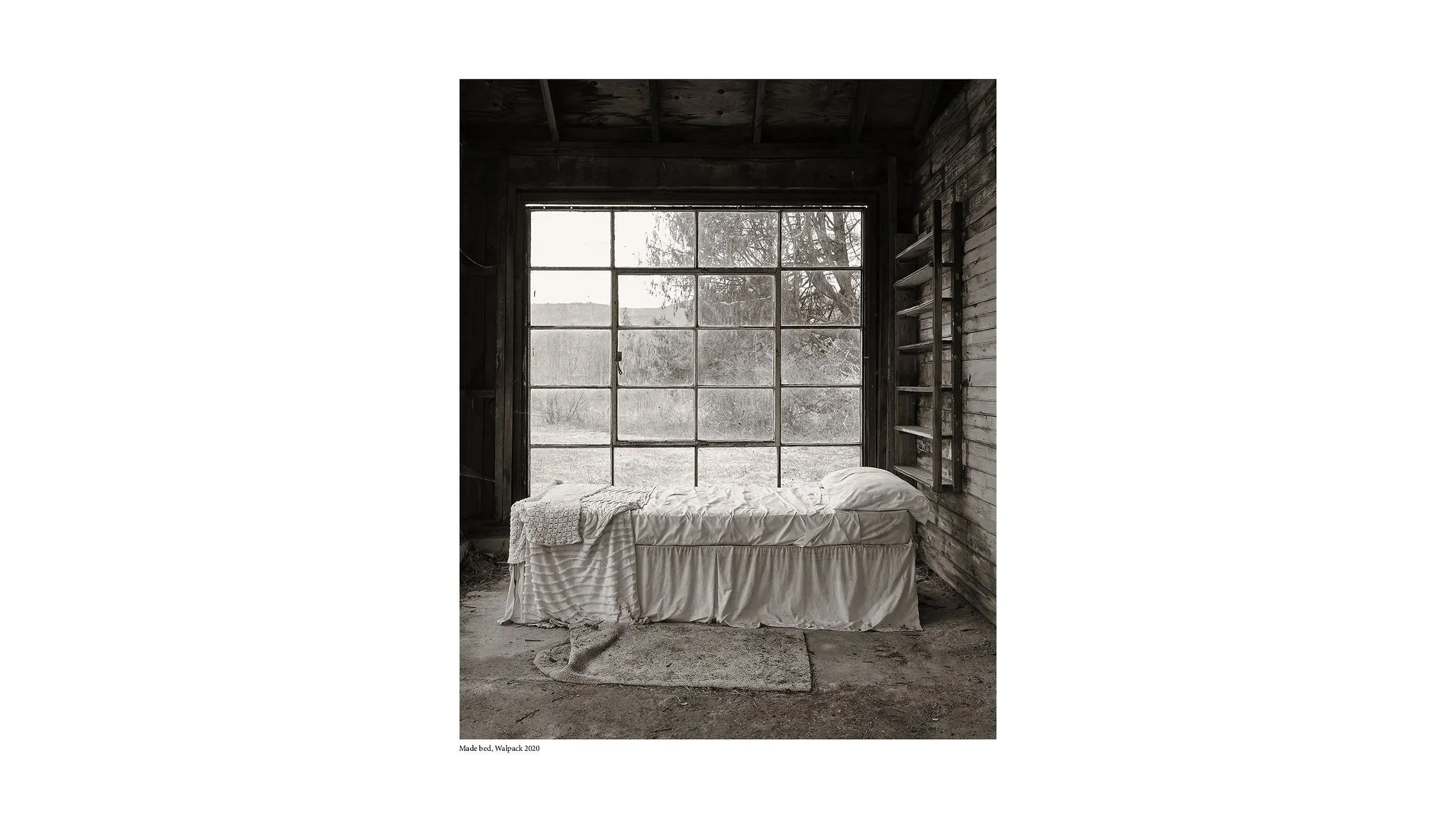
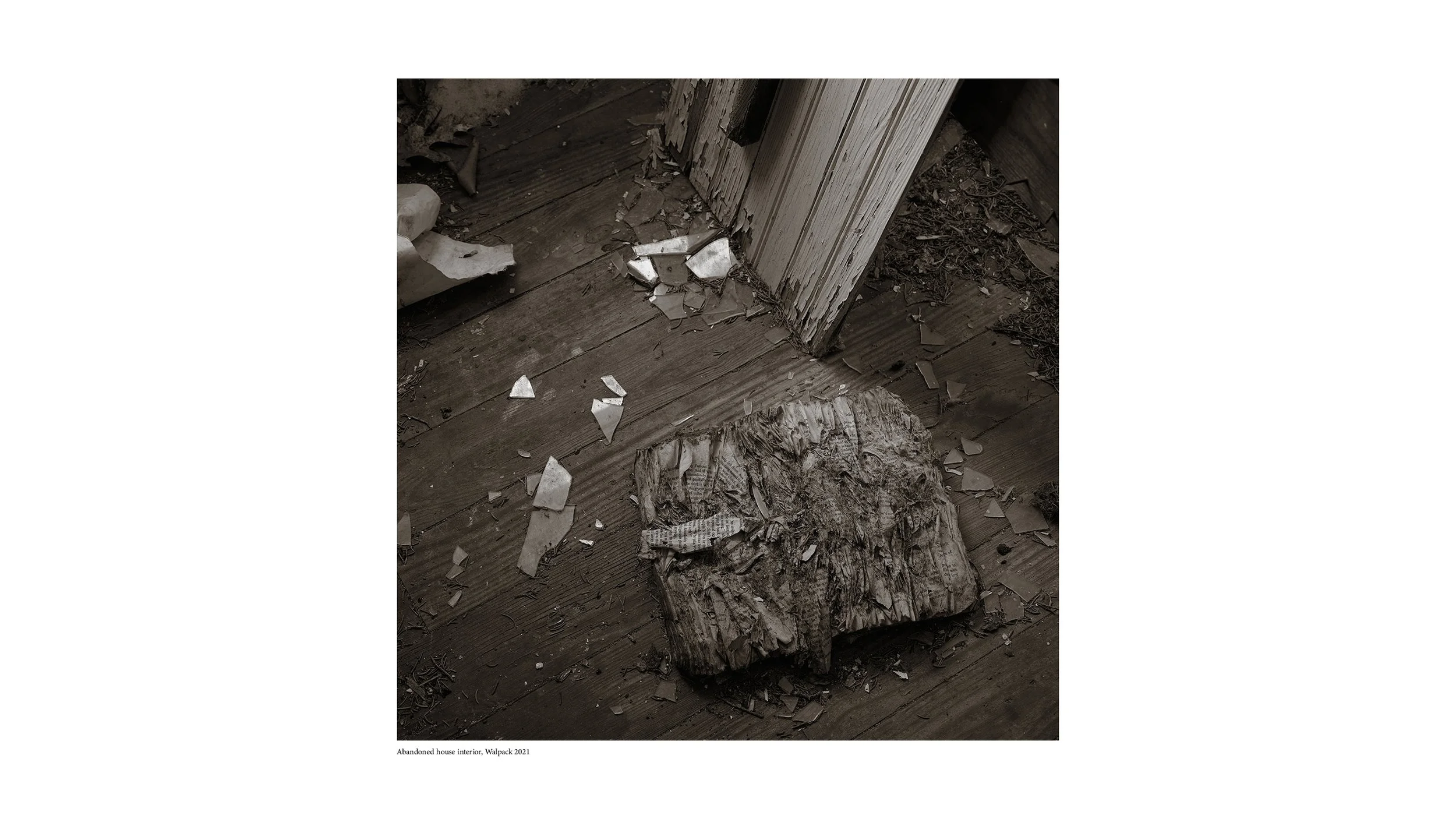
I return to Walpack each year and find less of her each time. A roof gives way without ceremony. Stone walls dissolve into the forest floor. Names fade from wood, from paper, from memory. Wallpaper peels where voices once filled a room. Windows frame nothing. Rooms open to the weather. There is a kind of quiet violence in slow forgetting. The river chokes on ice. A horse fence collapses under the weight of the snow. A stone wall disappears beneath leaves. A road softens, then disappears. And all that land continues—not unchanged, but unburdened by the need to explain itself. And somewhere beneath it all, everything remains.